
 EN
EN
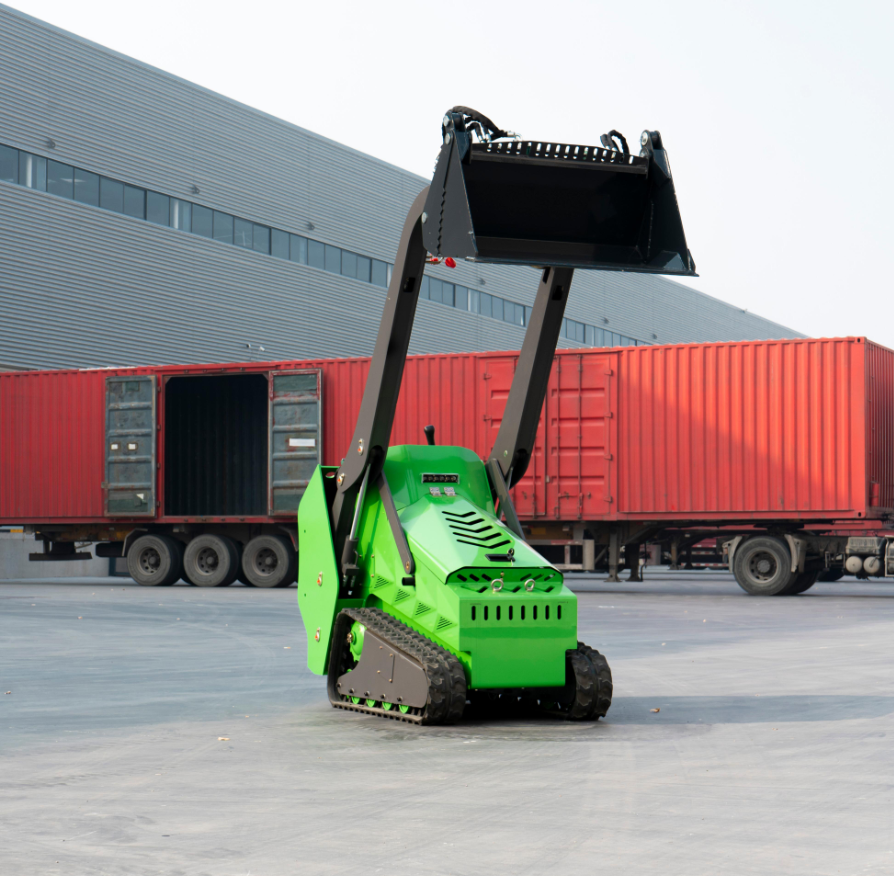
The Monday Morning Wake-Up Call
If you’ve ever buried a wheeled skid steer up to the axles in mud on a Monday morning, you already know why track machines exist. I’ve been there—and it’s not just about getting stuck. It’s about lost hours, pissed-off clients, and ruts that take half a day to fix. We run both track and wheeled skid steers across landscaping, residential grading, and utility jobs. Over the past few seasons, we’ve started logging real numbers on ground pressure, not just reading spec sheets. And the gap is bigger than most people think.
The Numbers That Made Us Rethink Everything
On paper, a track machine gives you 3 to 5 psi against the ground. A wheeled unit of similar weight? Usually 40 to 75 psi. That’s a 10× to 15× difference. But here’s what that means in practice: a wheeled loader on wet clay leaves ruts deep enough to trip over, while a tracked loader on the same pass leaves a barely visible imprint. We measured this ourselves on a reclaimed building site last spring. Same load, same speed, same soil moisture. The wheeled unit sank 4+ inches. The track unit? Just over 1 inch. That matches the University of Minnesota’s 2022 clay-soil trial, where tracked machines showed a 73% reduction in rut depth compared to wheeled models (that study is publicly available through their ag engineering extension).
Why Tracks Float and Wheels Dig
The track doesn’t just spread weight—it keeps spreading it continuously. Wheels pound the same four spots repeatedly, which is exactly what causes progressive sinkage. Tracks roll over fresh surface with every inch of movement. We see this most clearly on finished turf and sandy fill. On a recent residential pool access job, we brought both machines to test access routes. The wheeled unit tore up the lawn in two passes. The track machine ran all day, and the homeowner couldn’t tell where we’d driven. That’s not marketing hype. That’s the difference between a callback and a referral.
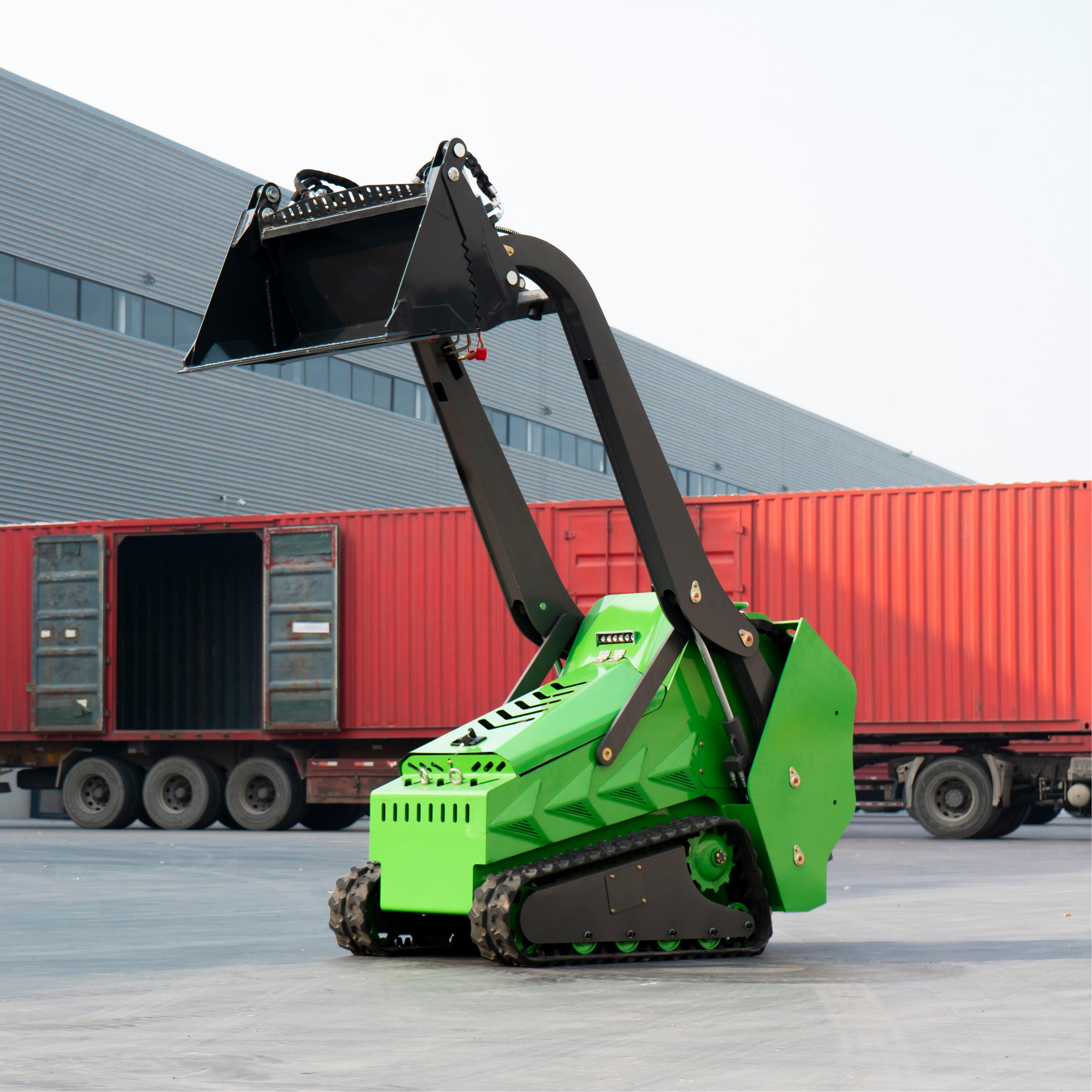
What Winter Taught Us About Traction
Winter work is where track machines separate themselves completely. We do snow clearing and material hauling on sloped driveways in freezing conditions. Wheeled units lose grip the moment frost turns to glaze. Tracks? They hold. The lug pattern matters a lot here—deep, angled treads bite into ice similarly to how ASTM F2413‑21 describes slip-resistant footwear principles. It’s the same mechanical logic: more contact edge, more friction, less sliding. Last February, we had a wheeled machine slide sideways on a 12° icy ramp. Nobody got hurt, but we parked it and ran tracks the rest of the week. That decision saved us at least three towing calls.
Honest Talk: Tracks Aren’t Always the Answer
I’m not going to tell you tracks are always better. On hard-packed gravel, recycled asphalt, or concrete, wheels are cheaper to maintain and faster to turn. Track undercarriages need more frequent idler and track tension checks—we budget about 15–20% higher annual undercarriage cost per machine. But if your work touches soft ground more than 30% of the time, tracks pay for themselves in reduced downtime alone. We’ve done the math on our fleet, and the break-even point is usually less than two seasons.
Our Go-To Rule for Choosing
Choose tracks when you work on wet clay, loam, sand, or turf; when you need to leave the site as clean as you found it; or when you operate on slopes or icy surfaces more than occasionally. Choose wheels when you’re mostly on hard, stable surfaces, or when you prioritize lower upfront cost and simpler maintenance. We keep both in our yard. But if I had to pick one machine for unpredictable ground, I’d take tracks every time—not because the spec sheet looks good, but because I’ve spent fewer afternoons with a shovel because of them.
Crew Questions We Actually Get Asked
Q: Is the ground pressure difference really that big? Yes. We’ve measured it with a pressure mat on site. 3–5 psi vs 40–75 psi is real, and you can feel it from the seat—the track machine rides softer and doesn’t lurch when the ground gets wet. Q: Do tracks work on ice as well as they claim? Better than wheels, but not magic. On glare ice, you still need care. The lug design helps, but we don’t promise zero slip—just way more control. Q: What’s the biggest hidden cost? Track wear on abrasive surfaces like crushed rock and demolition debris. We swap tracks about every 1,200–1,500 hours depending on conditions. Q: Can I use a track skid steer on pavement? Yes, but it will wear tracks faster and leave black marks. We use wheels for pavement-heavy jobs.