
 EN
EN
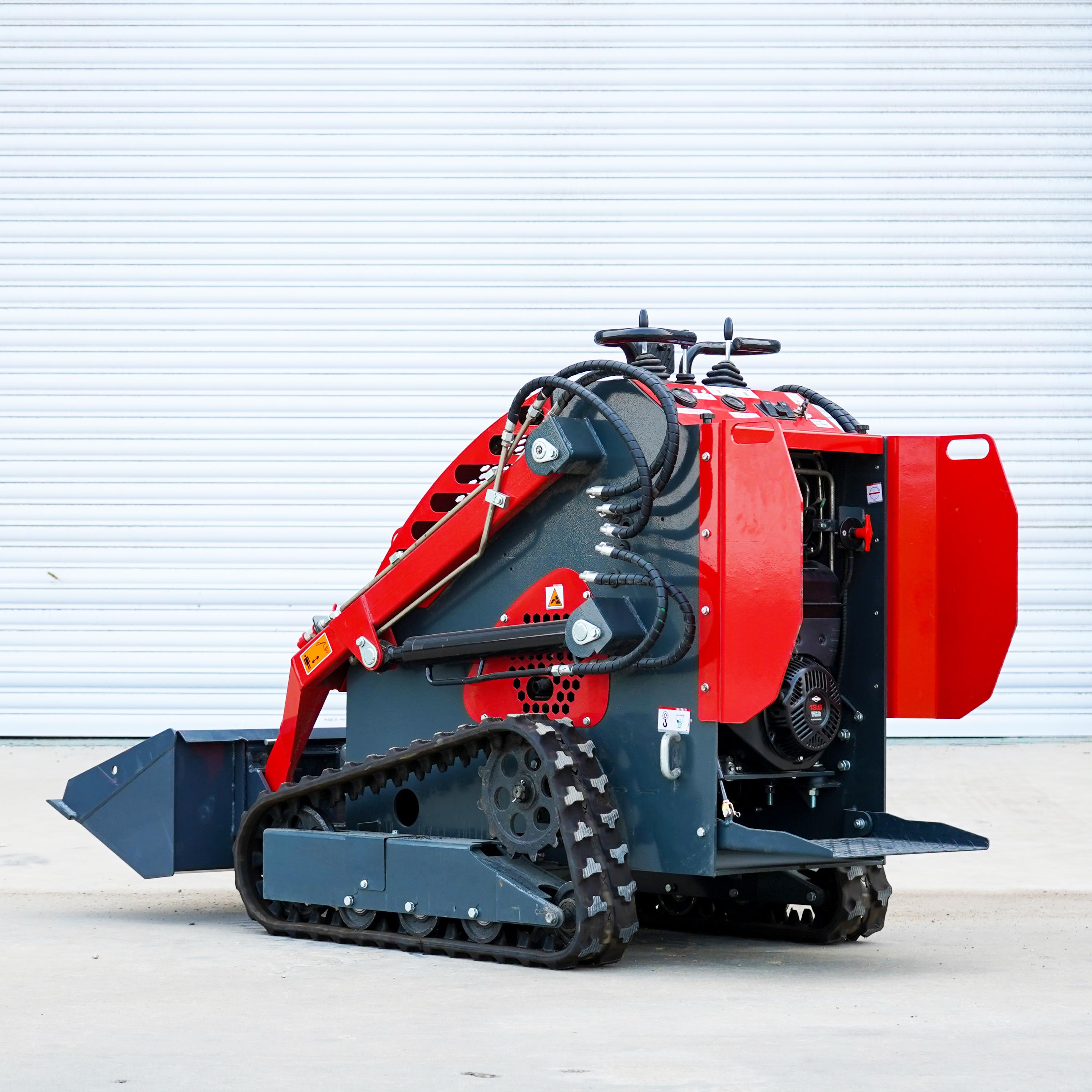
Problems Faced by Skid-Steer Loaders with Wheels When Operating in Mud and Rough Terrain
Traction and Stability Issues on Soft, Saturated Surfaces
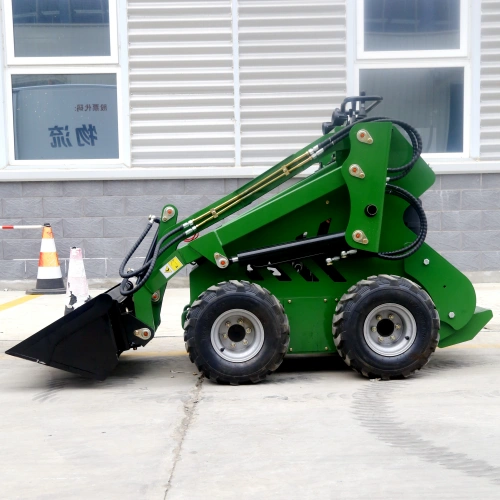
Wheeled Skid Steer Loaders encounter severe operational deficiencies when working on wet or loose surfaces. Due to their narrow tires, they distribute their operational weight onto a smaller contact patch, which simultaneously reduces friction and makes contact with the rubber surface. When working in the mud or saturated soils, the grip becomes further compromised, as mud and water lubricate the surface. It is common to see a wheel skid steer loader sink into saturated soils, with the wheels spinning helplessly. Furthermore, the rigid frame design of wheeled skid steer loaders is a severe detriment to stability on slopes, as the center of gravity is displaced and the risk of rollover increases. It is likely that Terrain Safety Assessments conclude that driven loads on uneven or inclined surfaces may lead to a 50% increase in rollover risk. Additionally, stalling and hydroplaning in standing water causes rotational movement to be random, and operational movement becomes inherently inefficient.
Ground Pressure and Floatation
Unlike skid steer tracks, which distribute weight more evenly, wheels create more concentrated ground pressure, which is likely greater than 30 psi. This aids in the development of large ruts on the surface of the soil, which quickly deteriorates and damages the soil more than 6 inches deep. Floatation deficiencies become critical in deep mud.
Track vs. Wheel Skid Steer Loaders: Off-Road Performance Reviewed
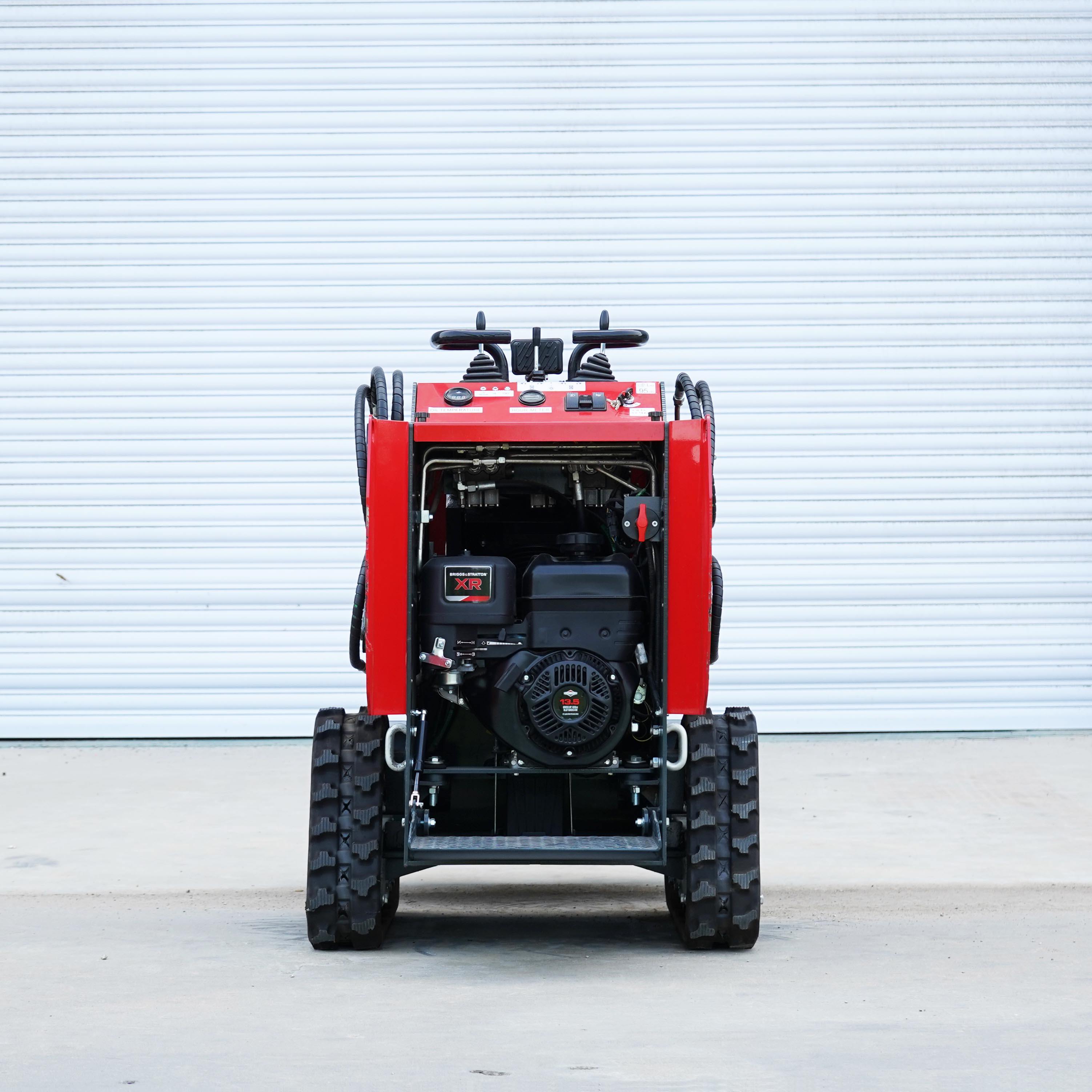
Benefits of Track Systems include Better Grip, Stability, and Low Ground Pressure
In off-road conditions, track equipped skid steer loaders outperform wheeled models for three fundamental design reasons. Continuous rubber tracks maintain full contact with the ground and provide 40% more traction than tires. This added grip prevents slippage in mud, snow, and loose soil where wheeled skid steer loaders struggle. Wider tracks have a lower center of gravity and improve stability on sloped and uneven surfaces by 30% and reduce the likelihood of a skid steer tipping over. The most important reason is track systems have a ground pressure of less than 5 PSI as opposed to 30+ PSI for wheeled systems. This means tracks can more evenly distribute their weight and “float” on saturated surfaces without leaving ruts. This type of performance is extremely helpful in the places where wheeled skid steer loaders are not able to be used due to maintaining the landscape or damaging the terrain.
Performance Factor Track Systems Wheel Systems
Ground Pressure <5 PSI (flotation) 30+ PSI (concentrated)
Slope Stability Up to 30° incline capability Limited beyond 15°
Surface Protection Minimal rutting/compaction High rutting risk
All of these factors make track systems the only viable option in muddy, unstable or ecologically sensitive job sites, where the use of traditional skid steer loaders is neither efficient nor safe.
Understand the Difference Between OTT Track Systems and Full Track Systems
Tracks that go Over the Tires (OTT) as opposed to Fully Track Systems
Full track systems can convert a wheeled skid steer into a skid steer best suited for off road activities. OTT tracks, on the other hand, can extend the flotation and traction capacity of wheeled skid steers best suited for on road conditions without a full track conversion. Ground pressure can be reduced by 50% and rutting can be avoided on soft soil (as compared to wheeled skid steer loaders without tracks) as OTT tracks can widen the footprint of a skid steer. The flotation capacity of a skid steer can be improved as well to prevent sinking on loose soil.
Deep treads and steel lugs improve traction on hills and uneven surfaces. Rubber OTT tracks perform well on turf and paved surfaces, allowing for landscaping without damaging the surfaces. Steel OTT tracks work best on rocky and icy surfaces. On extreme, muddy surfaces and steep, hilly surfaces, they provide self-cleaning traction.
Feature Rubber OTT Tracks Steel OTT Tracks
Best For Turf, snow, sand Mud, ice, rocky slopes
Ground Impact Minimal disturbance High traction, self-cleaning
Key Advantage Surface protection Durability in harsh conditions
Switching out wheels for tracks can be done within minutes. This short switch makes OTT tracks a good option if the job is only going to be temporarily muddy, and helps avoid buying a track loader. This makes OT tracks a good option for all terrain on already owned skid steers.
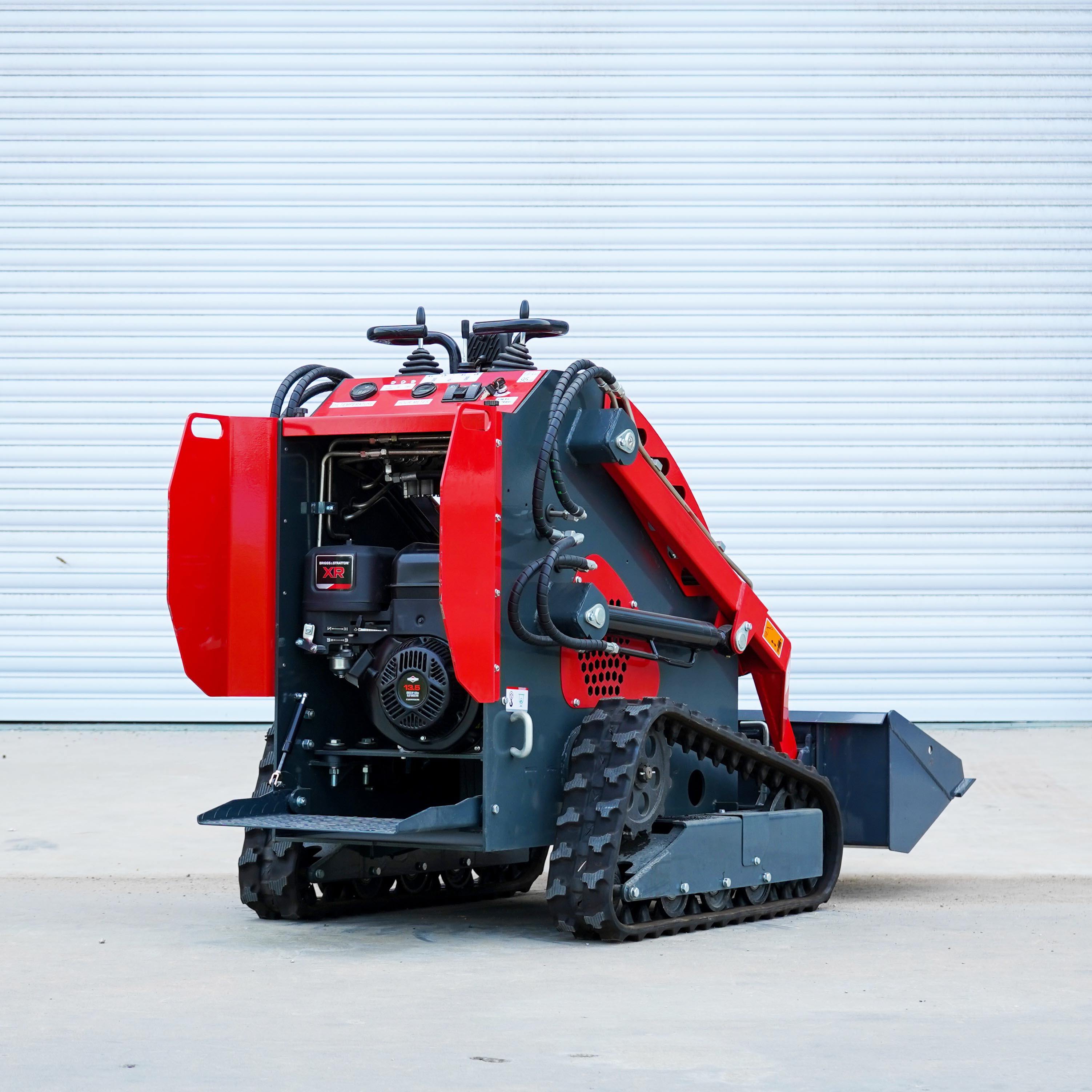
When to Choose a Wheeled Skid Steer Loader—and When to Upgrade or Alternate
Wheeled skid steer loaders work best on hard, stable surfaces like asphalt, concrete, and packed earth. They’re well-suited for urban construction, pavement repair, and landscaping jobs where maneuverability and travel speed (8 to 12 mph) are important. Maintenance costs are 30 to 40 % lower, compared to their tracked alternatives. Lively operations remain limited to even terrain. These machines can lose traction, and when this happens on a saturated surface, it can increase downtime by up to 50%.
Think about upgrading to Compact Track Loaders when:
- You have projects that require extensive work on soft, wet, or unstable grounds.
- You need to preserve the ground when you’re working. Track systems reduce ground pressure by ~60% compared to wheels.
- You need the most stability when performing a heavy grading or slope operation.
When you have projects that need to traverse multiple types of terrain, tracks that go over the tire (OTT) may be a good first step to increasing floatation without the cost of fully combining your loader. When compared to the trade off of durability, a permanent track system may be a better first step when you frequently work off road. Shifting budgets and terrain types on a yearly basis may help determine what you need. Many contractors start out with wheeled loaders for versatility, and then add tracks when the demand for business activity increases.
FAQ
Why do wheeled skid steer loaders struggle in muddy conditions?
Wheeled skid steer loaders struggle in muddy conditions because of their narrow tires. This results in weight that is evenly distributed and reduced traction. The combination of ground pressure and mud results in sinking and reduced stability.
What are benefits of the track systems versus the wheel systems?
Tracks systems provide load pressure distributions and superior traction. This makes them excellent in muddy and uneven terrains.
What are OTT tracks, and how can they help?
Over-the-tire (OTT) tracks are a system of blocks that can be mounted on wheeled skid steer loaders. When added to a skid steer, these systems may help floatation and traction on soft or uneven ground when a complete conversion to a full track system is not warranted.
When should I think about upgrading to a track loader?
You should think about upgrading to a track loader if you need to work on soft and unstable grounds frequently, if you need to preserve ground, or if you need slope operations that require maximal stability.
Are wheeled skid steer loaders still useful?
Certainly! Firm and stable surfaces like asphalt and concrete provide optimal working conditions for wheeled skid steer loaders, since they offer greater maneuverability, a higher travel speed, and lower maintenance costs than tracked skid steer loaders.