
 EN
EN
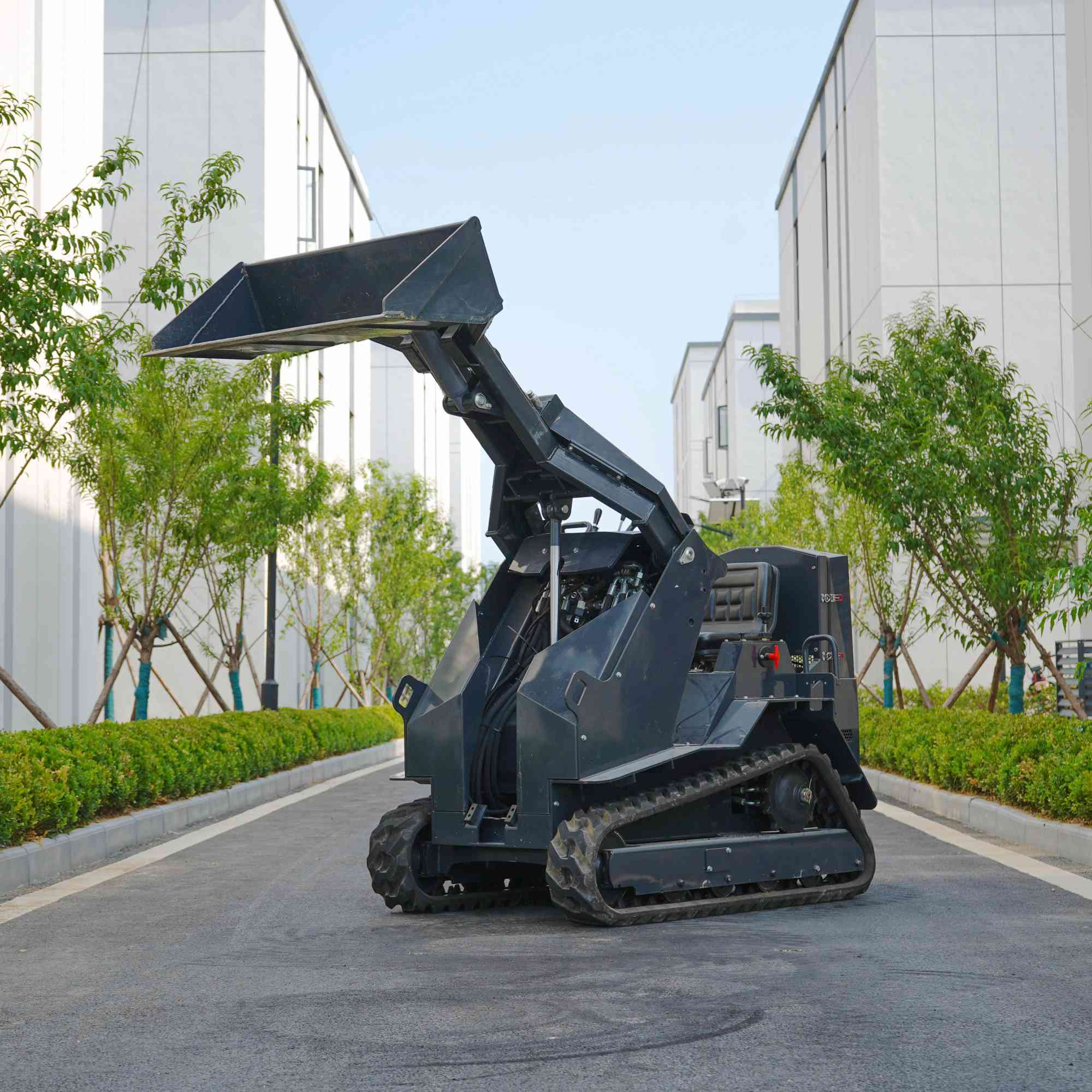
Zero-Turn Maneuverability: The Core Advantage of the Skid Steer Loader
Differential steering and the ability to make true zero-radius turns
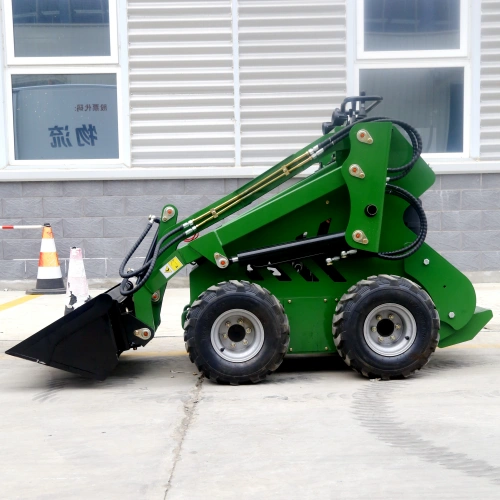
Differential steering is the distinguishing characteristic of skid steer loaders. Instead of a steering wheel, the operator controls the speed and direction of the wheels or tracks on either side of the machine. If the operator wants to turn left, the right side wheels move forward, while the left side wheels slow, stop, or move backward, causing the machine to pivot around its center of mass. Because of this design, skid steer loaders can create a zero-radius turn, unlike the wide turning arcs of conventional vehicles. This means that, on a jobsite that is congested like urban environments, the skid steer loader can turn where it stands within a 1.5-meter alley and proceed to move forward, without the need to move backward first. Field observations of various jobs indicate that, in confined spaces, the repositioning time is drastically decreased, and the operators can complete a job 25–30% faster. This ability to pivot on a dime reduces the disturbance to the earth that larger machines do with surface scraping. Because of this characteristic, skid steer loaders are extremely useful for renovations such as basement and elevator shaft renovations, as well as work between the walls of buildings.
Skid Steer Loader vs Alternatives: A Comparison of Turning Radii Against Compact Track Loaders and Mini-Excavators
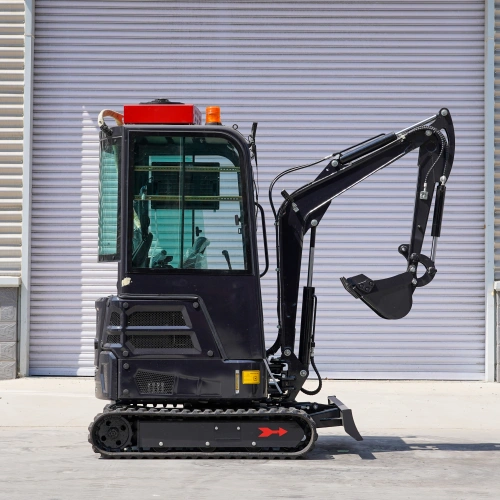
When working with limited space, skid steer loaders have a competitive edge over both compact track loaders and mini-excavators in terms of turning capabilities. A compact track loader needs 1.5 to 2 times the space of a skid steer to make a 180 degree turn due to its relationship of articulated movement of its tracks. An undercarriage confined in length as with mini-excavators restricts their ability to make a full in-place pivot, and mini-excavators must physically “walk” to the side to get around an obstacle, which will increase their cycle time and cause damage to the surface that they are working on. The differences are summarized in the following table:
Equipment | Minimum Turning Radius | In-place Rotation
It is this unrivaled turning performance that makes skid steer loaders the machine of choice for applications with high surface clearance constraint like loading docks and parking garages as well as interior zones of buildings in the early stages of demolition where maximum clearance is as desirable.
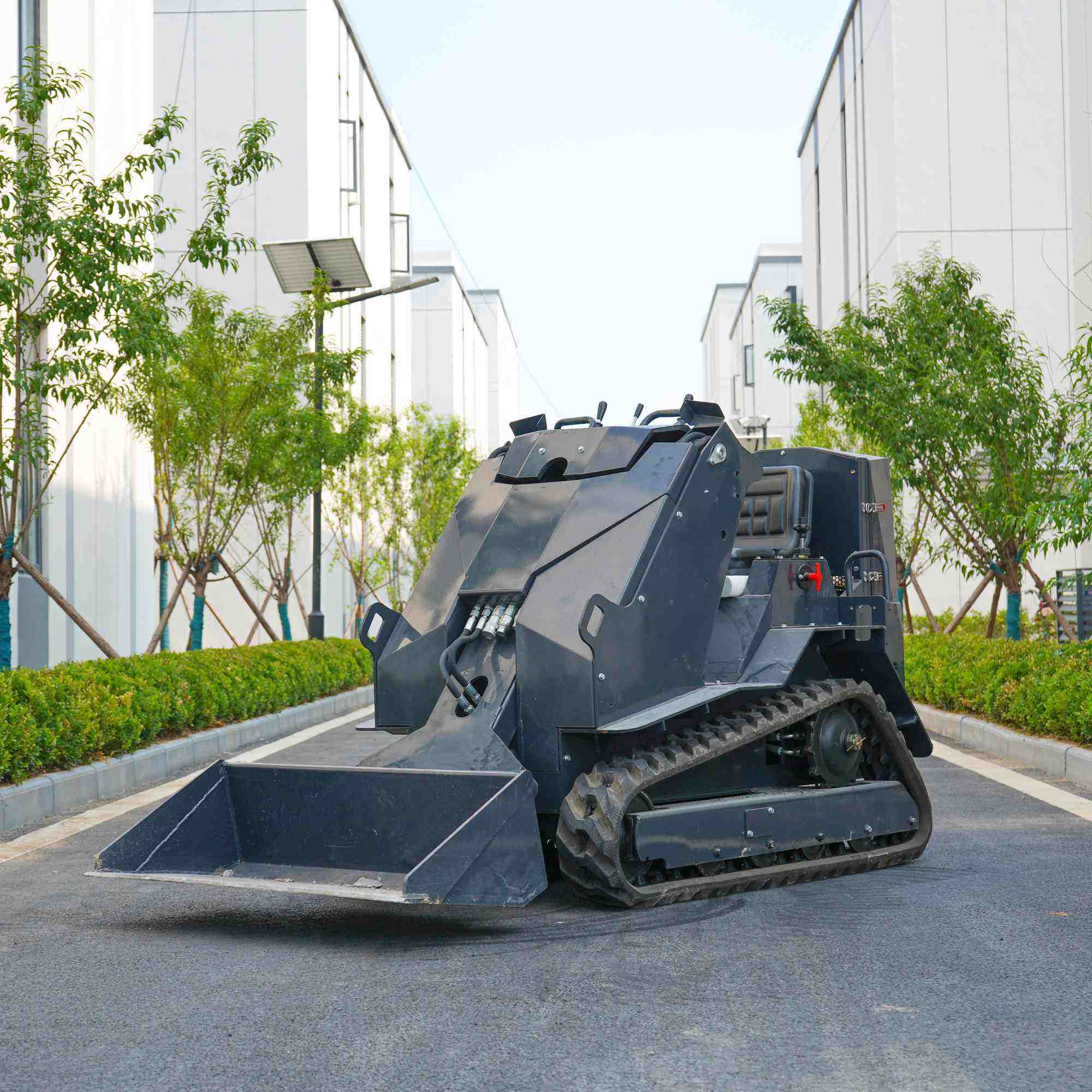
Compact Physical Profile: Restricted Access and Interior Workspaces Solutions
Models with Sub-1030 mm Widths for 36-inch Doorways, Elevators, and Utility Corridors
A standard 36-inch (914 mm) doorway is a critical access point for interior construction. Some skid steer loaders with widths under 1030 mm can still fit in a standard 36-inch wide door frame as they are only 990 mm wide. This narrow frame means the equipment can be brought into areas and sites where construction is taking place, where the equipment will be used to do a job in areas and tunnels that are inaccessible with large equipment, such as utility tunnels and basements. This narrow also means it will not be destabilized and it will not be unbalanced as it can carry a full load and it will not be unbalanced as it passes through a small area. Because of this, contractors will not have to make modifications of the walls to move things, which also helps keep a construction site safe.
Zero-Tail-Swing Innovation for Safer and More Efficient Operations in Trenches, Stairwells, and Other Confined Spaces
Zero-tail-swing (ZTS) means that when the equipment turns, the back of the equipment does not extend past the back wheels. In a trench, stairwell landings, and in small mechanical rooms, this means that the back of the equipment does not extend past the back wheels and it will not overhang past the back walls of the equipment and strike a worker or a wall. This helps keep a construction site safe and it will also make the site more productive as the equipment can be used right against a wall or a surface. In tight utility spaces, ZTS helps make the equipment fit in a space and stop the need to make the equipment move further away, which also helps the equipment be used with more precision.
Optimizing Size Classes and Load Capacity for Urban Renovation and Interior Demolition
The design of skid steer loaders for urban renovation and demolition applications necessitates a balance of power, precision, and physical limitation. Urban settings are a primary factor for the design of the three size classes of skid steer loaders. Offering Operating Capacity and Load Class Attributes and Focused Applications:
Size Class Operating Capacity Typical Urban Applications and Benefits
Compact Models < 1,800 lbs Interior demolition and light debris removal
Mid-Range Units 1,800–2,500 lbs Concrete slab breaking and moderate debris hauling
Large Frames > 2,500 lbs Structural component removal and heavy material handling
Compact models work well in tight spaces, mid-range models can easily break concrete, and large models can easily break concrete and carry debris. Choosing the appropriate class maximizes productivity while remaining within the safe load capacity of the floors. Selecting appropriately minimizes the risk of damaging the surrounding structures.
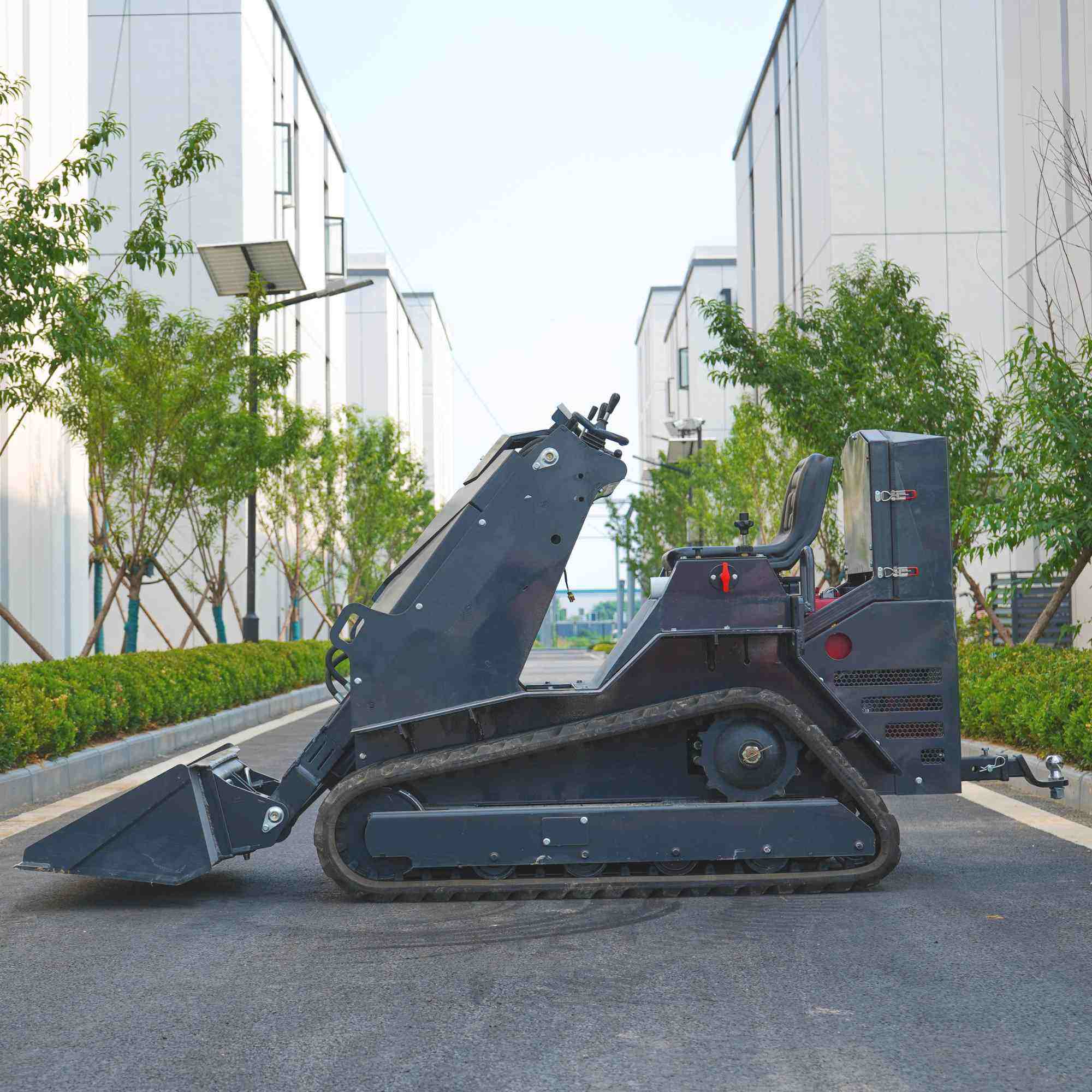
Attachment Versatility: Expanding Skid Steer Loader Capabilities With Spatial Restrictions
High-precision confined-space attachments: microtrenchers, hydraulic augers, and rotating brooms
The purpose-built attachments for spatially restricted work and the skid steer loader’s compact footprint become mutually invaluable. Micro-trenchers produce narrow, shallow utility channels (often only 1 inch wide) with minimum disruption to surrounding surfaces and foundations. Hydraulic augers produce deep, accurate, vertical holes in low clearance for footing and anchoring. Rotating brooms minimize the airborne particulate and efficiently remove dust and debris in interior demolition zones. These tools utilize the skid steer loader’s hydraulic flow and stable platform to complete tasks that were previously the domain of unique and dedicated machines. Rapid alteration of attachments avoids transporting and operating multiple pieces of equipment in confined work areas, thus minimizing site congestion, the number of labor shifts required, and the complexity of scheduling. For urban renewal teams, the skid steer loader with these attachments becomes a single high-precision multi-tool, reducing equipment costs and fulfilling a requirement for safety and spatial compliance.
Frequently Asked Questions (FAQs)
What is the primary benefit of a skid steer loader over other equipment?
The primary benefit of a skid steer loader over other equipment is the ability to perform zero radius turning due to its differential steering system. As a result, it can work in confined spaces far more efficiently than other equipment, including Compact Track Loaders and Mini Excavators.
Are skid steer loaders able to fit standard door ways?
Yes. Many skid steer loaders fit through standard 36 inch (914 mm) doorways because their width is under 1030 mm making them great for jobsites located in urban or interior locations.
What are the size classifications of skid steer loaders?
The small size is considered the compact model (operating capacity < 1,800 lbs), mid-size is considered the mid-sized model (1,800–2,500 lbs), and the last and largest size is the large frame (> 2,500 lbs). They can each perform unique tasks, ranging from small interior demolition to handling large heavy duty materials.
What are some standard attachments that skid steer loaders can use?
Common attachments that perform high precision and targeted work within confined spaces include micro-trenchers, hydraulic augers, and rotating brooms. Because of their ability to perform specific tasks, rapid trenching, drilling, and debris removal can all be accomplished very easily.
What is Zero-Tail-Swing (ZTS) and why is this significant?
This feature helps to ensure safety within a worksapce by preventing the rear of the skid steer from supplanting beyond the tires or tracks when it rotates. This feature is also significant to a high level of efficiency for confined workspaces, and it decreases the chances of hitting walls or people.