
 EN
EN
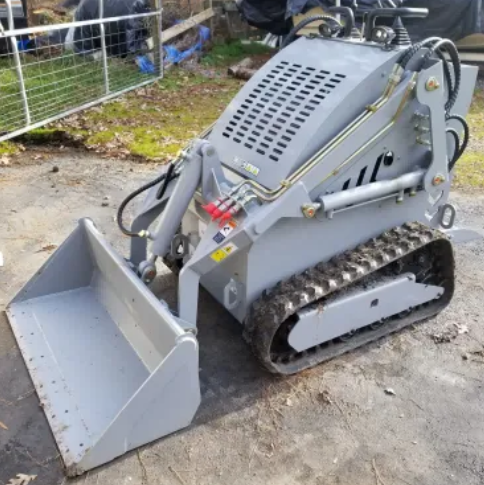
A mini skid loader parked behind a suburban garage is not a construction site machine — it serves weekend digging, garden beds, and snow clearing, where the right power source decides whether the tool gets used or stays parked. The better choice is rarely the most powerful; it is the one whose runtime, noise, and upkeep fit the few hours a homeowner actually spends operating. Matching power to the task beats maxing out spec sheets.
A Homeowner Who Matched Power to the Backyard
The Background — A Large Garden With Recurring Jobs
A homeowner with a quarter-acre garden faced repeating tasks: moving mulch, digging a pond edge, and clearing snow from a long drive. The jobs came in short bursts on weekends, not all-day sessions. A mini skid loader promised to replace the wheelbarrow and shovel, but the owner worried about noise reaching the neighbors and fumes in the enclosed carport where it would be stored.
The Problem — Noise and Fumes at the Fence Line
A borrowed gasoline unit rattled the fence line and left the carport smelling of fuel, which the household found unpleasant and the neighbors noticed. The owner also disliked the pull-start and winter fuel stabilizer routine that came with small-engine ownership. The tool risked becoming more chore than helper if the power source fought the setting.
The Solution — Picking Battery for Light Use
The owner chose a battery-powered model sized to the light, intermittent loads of garden and snow work, with a second pack for longer sessions. It ran indoors-safe in the carport for charging, started with a button, and stayed quiet enough for mid-morning use. The spec traded peak power for fit with the real pattern of weekend hours.
The Effect — Quiet Weekend Work
Weekend jobs got done without waking the street, and the carport stayed odor-free. Because charging simply plugged in, the owner used the machine more often for small tasks instead of saving it for big ones. The right power turned a reluctant purchase into a regularly used tool, which is the only measure that matters at home.
Risks of the Wrong Power Choice
Exhaust Becomes a Neighbor Problem
A combustion engine in a dense neighborhood pushes noise and fumes across property lines exactly when the owner wants to work — early morning or weekend. Complaints and awkward relations follow, and some homeowners' associations restrict engine use by hour. A power type that respects the fence line keeps the tool welcome instead of a source of friction with the people next door. A mini skid loader that annoys the neighbors gets parked and forgotten, wasting the purchase.
Idle Complexity Wastes the Owner's Time
Gasoline and diesel units need fuel handling, oil checks, filter changes, and winter storage prep that a casual user may skip, leading to hard starts and stalled projects. The maintenance load competes with the little free time the machine was meant to free. A power source with fewer consumables respects the owner's actual attention budget rather than assuming daily operator discipline. A mini skid loader with simple upkeep gets used weekly, not just on ambitious weekends.
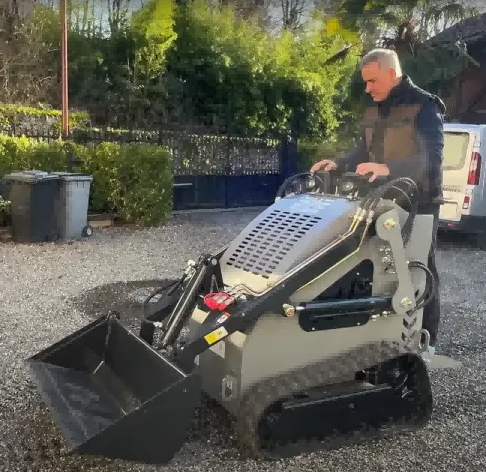
How Each Power Type Behaves at Home
Battery Power for Short, Clean Sessions
A battery mini skid loader runs silent, emits nothing at the point of use, and charges from a wall outlet, which suits enclosed storage and tight lots. Runtime limits it to a few hours per pack, but that matches the burst pattern of home tasks. Zero exhaust also means it can work in a greenhouse or near open windows without health concerns.
Gasoline for Reach Without a Charge
Gasoline gives unlimited runtime as long as fuel is on hand and reaches remote corners of a property without a charged pack. It costs less upfront than battery and suits owners with longer, scattered sessions across a large lot. The trade is noise, fumes, and the small-engine care that battery avoids, so it fits users who value range over calm.
Diesel for Heavy, Frequent Duty
Diesel delivers strong torque and fuel efficiency for demanding, repeated loads like repeated earth moving or continuous landscaping work. It suits a property or small business with near-daily use where the torque pays back. For a typical household with weekend bursts, though, the weight, noise, and service interval usually exceed what the light pattern needs. A mini skid loader sized for garden use rarely needs that diesel overhead at home.
Standards and a Home Buyer's Checklist
Rules That Still Apply at Home
Even a home unit follows ISO 12100 for risk reduction in design and, in Europe, the CE Machinery Directive for conformity. In the United States, OSHA 29 CFR 1926 informs safe operation practice, and ANSI/SAE standards guide stability and control layout. Battery systems should meet recognized electrical safety practice for charging and storage, since the carport is a living-space-adjacent area.
Store, Charge, and Service the Unit Safely
Confirm runtime per pack against the longest realistic session, and buy a second pack if jobs often run long. Store the machine on a level surface with the battery at partial charge if idle for weeks, per the maker's guidance. Keep the charge area dry and ventilated, inspect tires and pivot greasing monthly, and follow the manual for winter storage so the first spring start is uneventful.
A mini skid loader for household use is powered by the source that matches its actual hours — battery for quiet, clean weekend bursts; gasoline for range; diesel for heavy, near-daily duty. Anchor the choice in ISO 12100 and OSHA 1926 practice, and the tool earns its place in the garage instead of gathering dust.
Frequently Asked Questions
Question
What power suits a home mini skid loader? Battery power suits most homeowners because weekend tasks come in short, clean bursts where quiet and zero exhaust matter more than all-day runtime. Gasoline fits larger lots needing range, while diesel suits heavy, near-daily duty that a typical home rarely reaches, so battery remains the usual first choice.
Question
Is a battery model strong enough? For garden beds, mulch, light digging, and snow, a battery unit handles the loads without trouble and runs long enough per pack for a weekend session. It trades peak power for fit with home use, and a second pack covers longer jobs when the first runs low.
Question
Does a gas model disturb neighbors? A combustion engine pushes noise and fumes across fence lines, which matters on weekend mornings in dense neighborhoods and may breach association hours. Battery power removes both issues, so owners who value calm and good relations usually avoid gasoline for light home use, keeping the peace with neighbors who value quiet.
Question
When does diesel make sense at home? Diesel fits a property or small business with repeated, demanding loads nearly every day, where its torque and efficiency pay back the higher noise and service load. For the typical household with occasional weekend bursts, the weight and upkeep usually exceed the need.
Question
How should I store a battery model? Keep it on a level surface and store the battery at partial charge if idle for weeks, following the maker's guidance. Charge in a dry, ventilated area away from living space, and inspect tires and pivots monthly so the first spring start is uneventful.
Question
What standards apply to a home unit? ISO 12100 covers design risk reduction, with CE marking required in Europe and OSHA 29 CFR 1926 informing U.S. safe-operation practice. ANSI/SAE guides stability, and the battery should meet recognized electrical safety rules for charging in a garage or carport, which buyers should verify with the supplier.