
 EN
EN
Understanding Mini Excavator Tonnage Classes and Real-World Performance
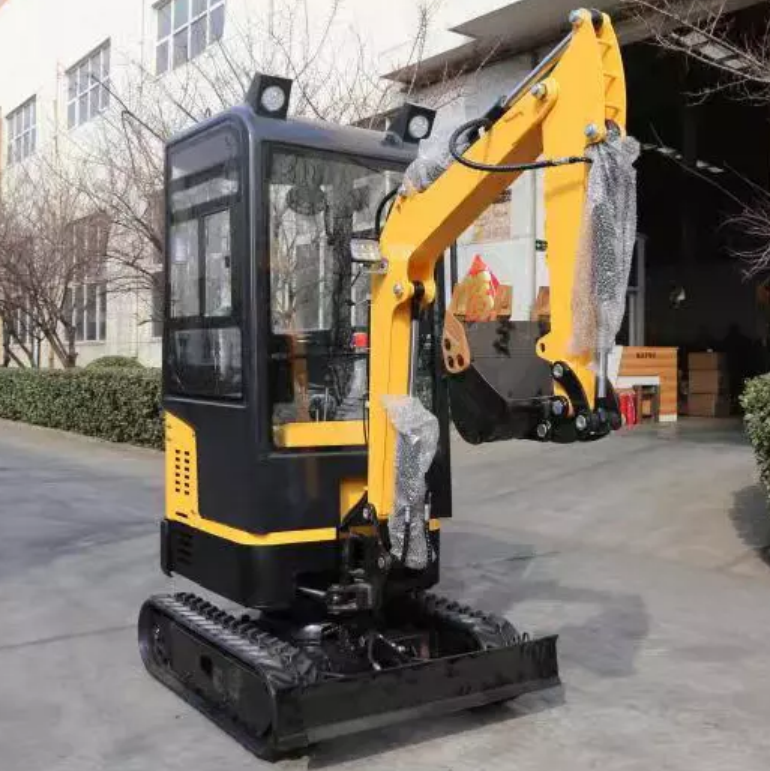
Mini excavator tonnage is not just a label—it defines the machine’s capabilities, from lifting power to site access. The operating weight—including the base machine, attachments, fuel, and operator—determines which projects it can tackle efficiently.
How Operating Weight Defines Mini Excavator Categories (Under 1-Ton to 6–10-Ton)
The weight of a mini excavator directly shapes its classification and intended use. Micro excavators, typically under 2,000 pounds (under 1 ton), are built for confined indoor demolition or tight urban landscaping where a 3‑foot‑wide gate might be the only entry. The 1–2 ton class—the most compact of standard mini excavators—can dig trenches up to 9 feet deep and lift material to 9 feet high, making them ideal for sprinkler system installation. Moving up to 3–5 tons unlocks greater versatility: these machines handle 9–12 foot digging depths and 10–12 foot dump heights, commonly used for utility work and moderate landscaping. The 6–10 ton mid‑mini class bridges the gap to full‑size excavators, delivering 11–15 foot digging depths and 12–16 foot dump heights, suitable for heavier commercial tasks like road prep or large attachment use. Zero tail swing designs in the sub‑1.5 ton range allow the rear counterweight to stay within the track width—a critical advantage when rotating near buildings.
Why Tonnage Directly Impacts Digging Depth, Breakout Force, and Ground Pressure
Heavier mini excavators pack larger hydraulic cylinders and higher system pressure, directly translating into greater breakout force and deeper digging capability. The table below summarizes typical performance ranges across common weight classes.
| Tonnage Class | Max Digging Depth (ft) | Max Dump Height (ft) | Typical Breakout Force (lbf) |
|---|---|---|---|
| 1–2 tons | 6–9 | 7–9 | 3,000–4,500 |
| 3–5 tons | 9–12 | 10–12 | 6,000–9,000 |
| 6–10 tons | 11–15 | 12–16 | 10,000–15,000 |
Breakout force—the force exerted by the bucket to break through compacted soil—roughly doubles from the 1–2 ton to the 6–10 ton class, enabling work in tougher ground conditions. Ground pressure also scales with weight: a 1‑ton micro excavator exerts about 3–4 psi, preserving lawns, while a 6‑ton model may reach 5–7 psi, which can still be managed with wider rubber tracks. Selecting the right tonnage balances power with surface protection, ensuring the mini excavator performs without damaging the property.
Matching Mini Excavator Tonnage to Common Household Engineering Tasks
Trenching for Sprinkler Systems and Utilities: Why 1–2-Ton Mini Excavators Are Optimal
For residential trenching, 1–2-ton mini excavators deliver the ideal balance of power and footprint. Sprinkler lines typically require a trench depth of 40–60 cm, while utility conduits may need up to 1.2 m—depths easily reached by a 1.5-ton model, which offers a dig depth of 2.3 m and breakout force of 12 kN. These machines are narrow enough to cut a 15–20 cm trench, minimizing soil disturbance and backfill effort. A 2-ton unit can penetrate compacted clay common in suburban yards, yet its ground pressure of around 30 kPa keeps lawns intact. Larger excavators risk over-excavating and damaging existing underground utilities, while sub‑1‑ton machines lack the breakout force to handle rocky or root-infested soil. The 1–2‑ton class also accommodates standard bucket widths for clean, vertical trench walls—speeding up irrigation or utility installations.
Landscaping and Confined-Space Work: Zero-Tail-Swing Advantage in Sub-1.5-Ton Mini Excavators
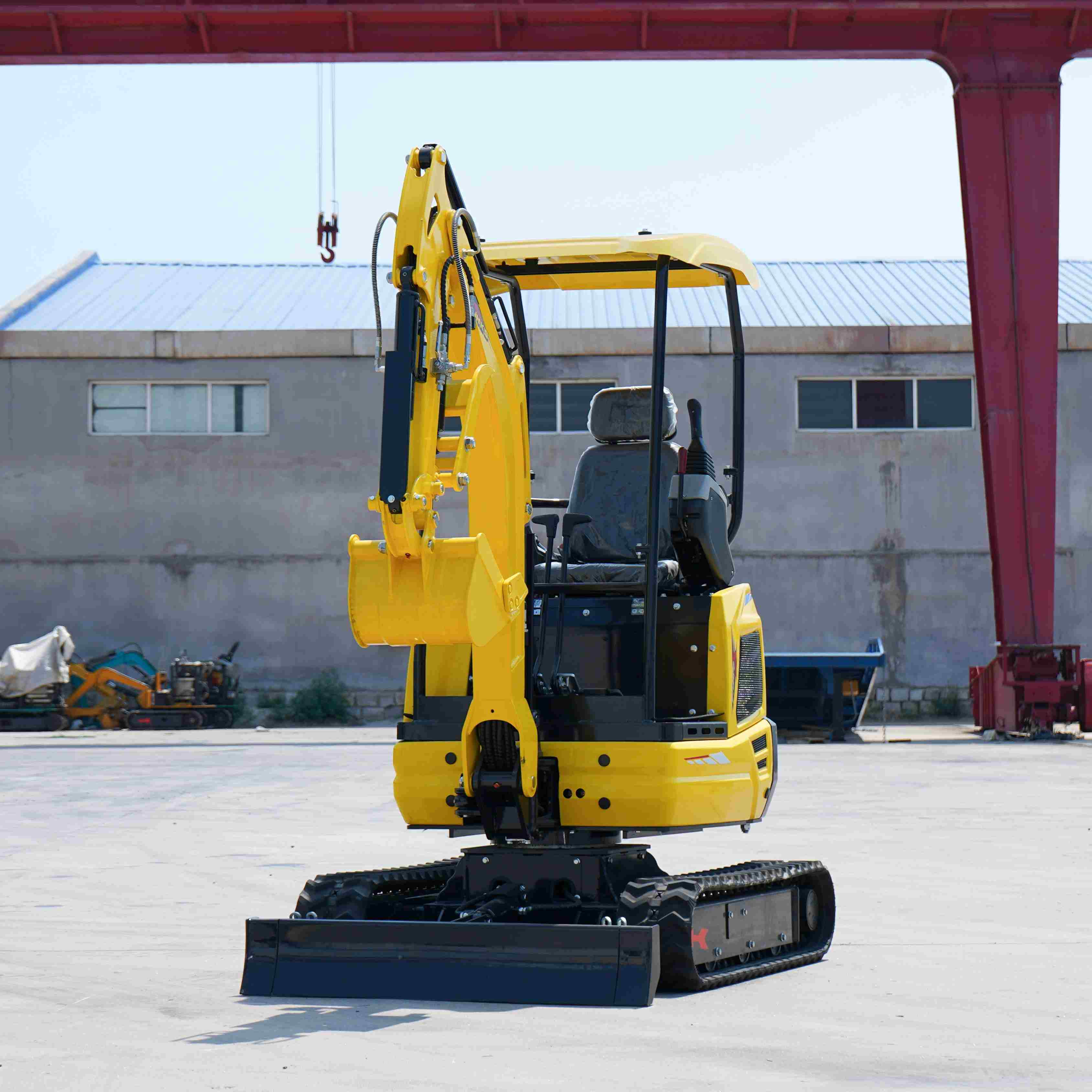
Sub‑1.5‑ton mini excavators with zero‑tail‑swing are the go‑to choice for landscaping and tight‑access projects. The rotating upper structure stays within the track width, allowing operators to work flush against walls, fences, and garden beds without repositioning. A 1.2‑ton zero‑tail‑swing model can pass through a 90 cm residential gate, making it practical for backyards unreachable by larger equipment. Ground pressure as low as 25 kPa prevents ruts on turf or paved driveways. These machines handle grading, tree planting, and small demolition with attachments like augers and breakers, while their compact size enables precise maneuvering around mature plantings. The combination of low ground impact and full-slew capability in confined spaces makes sub‑1.5‑ton zero‑tail‑swing mini excavators indispensable for high-detail landscaping work.
Site Constraints That Determine Mini Excavator Suitability More Than Tonnage Alone
Ground Pressure and Surface Protection: How Sub-1-Ton Mini Excavators Preserve Lawns and Driveways
Sub-1-ton mini excavators reduce the risk of costly surface damage. Their lightweight design—often under 2,000 pounds—spreads the load across wide rubber tracks, resulting in low ground pressure, typically around 3–4 psi. That’s comparable to the pressure exerted by a person walking. The machine can cross established lawns without leaving deep ruts, protects paved driveways and patios from cracking, and works immediately adjacent to structures without undermining foundations. Low-pressure tracks also prevent soil compaction in garden beds—making these machines the first choice for finish-grade landscaping and helping property owners avoid expensive restoration after project completion.
Access Limitations: Gate Width, Doorways, and Overhead Clearance as Critical Filters
Physical access often dictates the maximum machine size. Many residential side gates are only 36 inches wide; a sub-1.5-ton mini excavator can be as narrow as 30 inches, allowing it to pass through without removing fences or gates. Some models feature retractable undercarriages that further reduce width. Overhead clearance is another rigid filter: a low-hanging eave or tree branch demands a machine with a low-profile cab or folding ROPS (Roll-Over Protective Structure). Doorways and narrow corridors can also be navigated—but only if the machine’s width is less than the opening. Measuring these pinch points before renting or buying is essential; overlooking this step can lead to wasted time and the need for a smaller machine.
A Practical Decision Framework for Selecting the Right Mini Excavator Tonnage
A structured approach to choosing the right mini excavator tonnage prevents costly mismatches between machine capability and household tasks. Evaluate each factor below before rental or purchase.
- Project scope and dig depth: Match tonnage to the deepest trench or heaviest lift. Micro (under 1‑ton) models handle shallow sprinkler trenches and light landscaping, while 1‑2‑ton units manage utility trenches up to 8 feet. For deeper foundations or heavy material handling, step up to 3–5‑ton compact excavators.
- Ground conditions and surface protection: Check ground pressure ratings. A sub‑1‑ton machine exerts less than 3 psi, preserving lawns and driveways, whereas a 5‑ton model can exceed 5 psi and requires protective mats on soft ground.
- Access constraints: Measure the narrowest gate, doorway, or overhead clearance on the job site. Micro excavators pass through 30‑inch gates; zero‑tail‑swing designs under 1.5 tons rotate within their track width, eliminating rear collision risk.
- Transport and logistics: Confirm trailer and towing vehicle capacity. A 1‑ton mini excavator fits on a standard utility trailer behind a pickup, but a 5‑ton unit needs a 10,000‑lb trailer and a heavy‑duty truck.
- Attachment compatibility: Verify that the tonnage class supports the required hydraulic flow for augers, breakers, or thumbs. Many 1‑ton models lack auxiliary circuits for high‑flow attachments, so plan accordingly.
Run through this checklist in order—starting with the most limiting factor—to quickly narrow the suitable mini excavator tonnage range for any household engineering project.
FAQ
What is mini excavator tonnage?
Mini excavator tonnage refers to the operating weight of the machine, including the base unit, attachments, fuel, and operator. It determines the machine's capabilities, such as lifting power, digging depth, and ground pressure.
Which mini excavator is best for residential landscaping?
Sub-1.5-ton mini excavators with zero-tail-swing are ideal for residential landscaping. They offer low ground pressure, compact design for confined spaces, and compatibility with various landscaping attachments.
Can mini excavators fit through narrow gates?
Yes, mini excavators as narrow as 30 inches, such as sub-1.5-ton models, can easily pass through standard residential gates, typically 36 inches wide.
How does tonnage impact digging and breakout force?
Bigger tonnage classes feature larger hydraulic systems, resulting in greater breakout force and deeper digging capacity compared to smaller units.
What precautions should I take for lawn protection?
Choose a mini excavator with low ground pressure, usually below 3-4 psi, to avoid damaging lawns, driveways, or garden surfaces.
Do I need a specific trailer for transporting mini excavators?
Yes, the trailer capacity should match the weight of the mini excavator. For example, sub-1-ton models fit utility trailers behind pickups, while 5-ton excavators require heavy-duty trucks and trailers.
Table of Contents
- Understanding Mini Excavator Tonnage Classes and Real-World Performance
- How Operating Weight Defines Mini Excavator Categories (Under 1-Ton to 6–10-Ton)
- Matching Mini Excavator Tonnage to Common Household Engineering Tasks
- Site Constraints That Determine Mini Excavator Suitability More Than Tonnage Alone
- A Practical Decision Framework for Selecting the Right Mini Excavator Tonnage
-
FAQ
- What is mini excavator tonnage?
- Which mini excavator is best for residential landscaping?
- Can mini excavators fit through narrow gates?
- How does tonnage impact digging and breakout force?
- What precautions should I take for lawn protection?
- Do I need a specific trailer for transporting mini excavators?