
 EN
EN
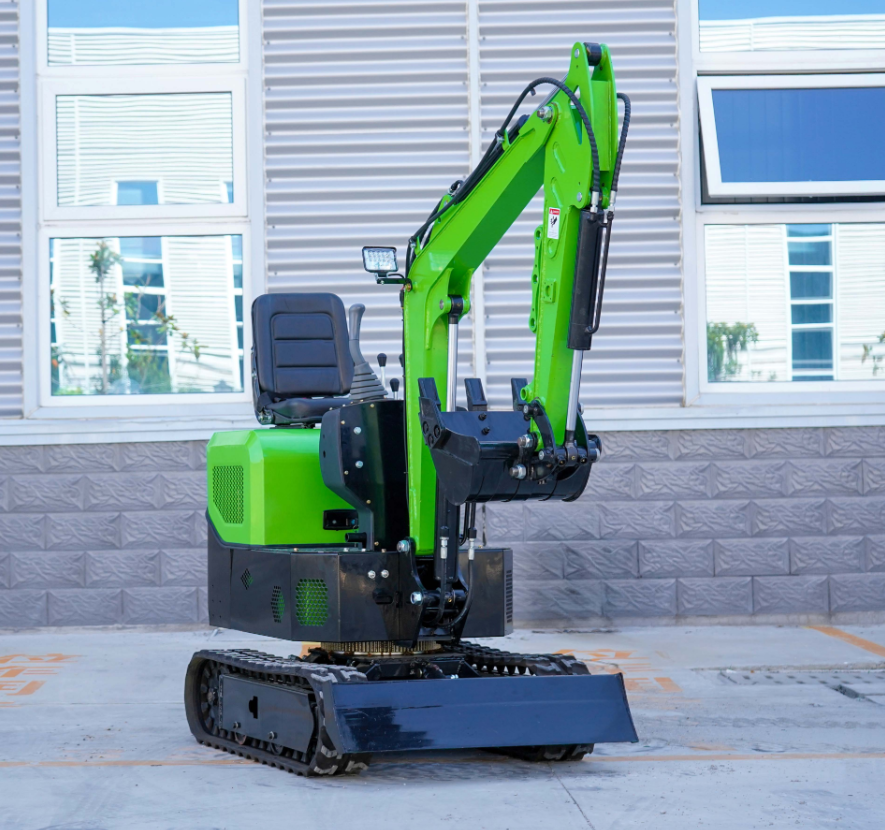
Core Versatility: How Multi-Attachment Mini Excavators Excel Across Key Construction Tasks
Precision trenching and digging in confined urban spaces
Eighty-five percent of contractors cite attachment versatility as the primary reason for choosing mini excavators (Equipment World, 2024). In tight urban environments—narrow alleys, courtyards, or between buildings—their compact footprint and zero tail swing enable operation where larger machines cannot fit. Equipped with a standard bucket, they dig precise utility trenches with minimal surface disruption; hydraulic controls allow operators to achieve consistent depth and vertical trench walls. A tiltrotator adds ±45° tilt capability, enabling fine grading and backfilling without repositioning the machine. Switching to a narrow bucket further refines trench width, while the ability to rapidly swap attachments reduces manual excavation in unstable soils—enhancing safety and protecting existing underground infrastructure. This agility makes multi-attachment mini excavators indispensable for gas line installation, fiber optic deployment, and other urban utility work.
Efficient demolition and material handling with hydraulic breakers and grapples
Hydraulic breakers convert mini excavators into powerful demolition tools capable of fracturing concrete slabs, foundations, and small structures—even inside residential basements or garages. Paired with 360° rotating grapples, the same machine sorts, lifts, and loads debris directly into dump trucks, eliminating the need for separate loaders or labor-intensive cleanup. The integrated workflow—enabled by quick-coupler systems—cuts downtime: switching between breaker and grapple takes minutes, not hours. Industry data shows multi-attachment mini excavators complete demolition and material handling up to 30% faster than using dedicated equipment, primarily by reducing idle time and eliminating handoffs between machines and crews.
Landscaping, utility installation, and augering with rapid attachment swaps
Landscaping and utility projects demand diverse capabilities—from drilling post holes to grading soil and laying conduit. A hydraulic auger drills holes up to 24 inches in diameter through compacted ground, ideal for fence posts, signage, or tree planting. For utility work, the same machine switches to a trenching bucket for cable or pipe placement, then to a grading bucket for final site finishing. Mechanical or hydraulic quick couplers enable these transitions in under a minute. Additional attachments—like rippers for rocky soil or plate compactors for trench bedding—extend functionality further. The result is one compact, maneuverable unit performing roles traditionally requiring a skid steer, trencher, and auger—reducing on-site congestion, lowering mobilization costs, and simplifying fleet management.
Quick-Coupler Technology: Enabling Seamless Mini Excavator Attachment Interchangeability
Mechanical vs. hydraulic quick couplers for optimal mini excavator flexibility
Quick-coupler technology defines how effectively a mini excavator functions as a multi-tool on dynamic job sites. Mechanical couplers rely on manual engagement—locking pins or levers—and offer durability and lower upfront cost, with fewer hydraulic components to maintain. Hydraulic couplers, by contrast, let operators switch attachments from the cab in under two minutes—a critical advantage for safety, cycle time, and crew productivity. This operational efficiency has driven adoption: quick-coupler use rose 40% since 2021, fueled by contractor demand for rapid tool changes and multi-functional performance (BusinessWire, 2023). The choice between systems shapes flexibility—hydraulic options suit high-turnover jobs; mechanical ones serve cost-conscious, lower-intensity applications.
Compatibility across high-demand attachments: buckets, thumbs, augers, and breakers
A standardized hydraulic interface ensures seamless integration of high-demand attachments—including grading and trenching buckets, hydraulic thumbs, augers, and breakers—transforming the base machine into a true multi-role platform. This interoperability allows sequential execution of complex tasks: dig a trench, drill a post hole, set a pole, then break up adjacent concrete—all without leaving the cab or calling in additional equipment. For contractors, this modularity replaces multiple specialized machines on a single site, cutting mobilization costs and minimizing ground pressure in sensitive areas like paved walkways or newly landscaped zones. Hydraulic readiness is now a core specification for fleet managers evaluating long-term value and operational scalability.
Urban and Confined-Space Advantage: Why Mini Excavators Deliver Precision Where Larger Machines Can’t
Mini excavators excel where space is constrained—not just because they’re small, but because their engineering prioritizes precision and control. Their zero tail swing design allows full 360° rotation flush against walls, fences, or adjacent structures; low ground pressure protects pavements, lawns, and subsurface utilities; and refined hydraulic responsiveness gives operators granular control over depth, angle, and force. According to the Association of Equipment Manufacturers (AEM), these features boost on-site efficiency by up to 30% in dense urban settings—largely by eliminating the need for extensive site prep or lane closures. A study by the Equipment Leasing and Rental Association (ELRA) confirms operators achieve a 40% reduction in operating time compared to larger alternatives, thanks to intuitive controls and spatial adaptability. That combination—precision, protection, and productivity—makes mini excavators the default solution for utility repairs, sidewalk replacements, and residential renovations in cities and suburbs alike.
Operational and Economic Benefits of a Single Multi-Attachment Mini Excavator Across Projects
Reduced equipment rental, transport, and crew costs on residential and utility jobsites
A single multi-attachment mini excavator consolidates functions traditionally requiring three or more machines—trencher, skid steer, auger, loader—into one platform. That consolidation slashes rental fees (one contract instead of several), cuts transport costs (one trailer load vs. multiple hauls), and lowers labor expenses (one operator manages the full workflow). On utility repair jobs—where space is tight and tasks shift rapidly—the machine can transition from trenching to breaking to material handling without delay or equipment changeovers. This eliminates standby units, reduces idle time, and maximizes daily utilization. For contractors bidding competitively on residential or municipal work, the leaner footprint, lower overhead, and faster turnaround translate directly into improved margins and stronger project delivery—without compromising quality or safety.
FAQ Section
What makes mini excavators preferred in urban construction sites?
Mini excavators are preferred for urban construction due to their compact footprint, zero tail swing design, and precise hydraulic controls. These features allow them to operate efficiently in confined spaces and protect surrounding infrastructure.
How do quick couplers improve mini excavator functionality?
Quick couplers enable rapid attachment swaps, allowing operators to transition between tasks like trenching, grading, and demolition in under two minutes. Hydraulic quick couplers enhance productivity, while mechanical quick couplers are cost-efficient for low-intensity applications.
Are mini excavators economical compared to larger construction machines?
Yes, mini excavators consolidate multiple functions traditionally requiring various specialized machines, reducing rental fees, transport costs, and crew expenses. This makes them more economical for residential and utility job sites.
What types of attachments can be used with mini excavators?
Mini excavators can integrate high-demand attachments like buckets, hydraulic thumbs, augers, breakers, and more, making them versatile multi-role platforms for construction and landscaping jobs.
Why are hydraulic systems critical for mini excavators?
Hydraulic systems ensure high attachment compatibility, precise control, and rapid operation, allowing mini excavators to perform complex tasks efficiently without requiring additional equipment.
Table of Contents
- Core Versatility: How Multi-Attachment Mini Excavators Excel Across Key Construction Tasks
- Quick-Coupler Technology: Enabling Seamless Mini Excavator Attachment Interchangeability
- Urban and Confined-Space Advantage: Why Mini Excavators Deliver Precision Where Larger Machines Can’t
- Operational and Economic Benefits of a Single Multi-Attachment Mini Excavator Across Projects
-
FAQ Section
- What makes mini excavators preferred in urban construction sites?
- How do quick couplers improve mini excavator functionality?
- Are mini excavators economical compared to larger construction machines?
- What types of attachments can be used with mini excavators?
- Why are hydraulic systems critical for mini excavators?