
 EN
EN
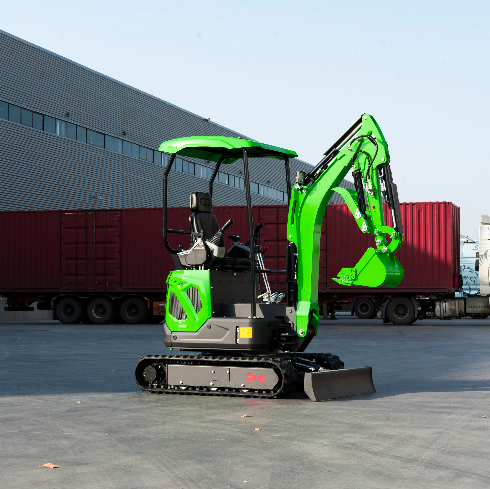
Experience the New Adaptive Track Systems and Zero Tailswing for Maneuverability in Confined Workspaces
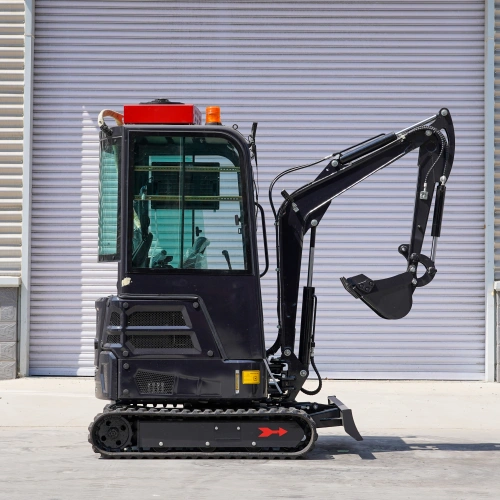
The ability to rotate the upper structure without the risk of colliding with surrounding walls and obstacles is especially important for working in narrow hallways and in enclosed spaces. Small excavators with a zero tailswing (ZTS) design keep the machine’s counterweight and engine fully within the width of the tracks. As a result, ZTS small excavators have 12–24 inch tailswing overhangs, which makes them incredibly compact. ZTS models require around 60% less clearance than traditional small excavators, which allows them to work in spaces just 8 feet wide. In contrast, traditional small excavators require clearance as wide as 14–18 feet. The 360 degree rotation of ZTS small excavators eliminates the need to reposition the machine multiple times, which makes cycles during digging and loading faster. With a reduced tailswing, small excavators are able to operate safely around equipment, walls, and pillars, which makes them a great addition to any productivity improvement project.
Telescoping and Variable-Width Tracks (e.g., Takeuchi TB216FR: 700–940 mm) for Dynamic Access Adjustment
Tight spaces can come in all types of shapes and sizes. Telescoping undercarriages can be adjusted to narrow the track width for transport (down to 700 mm for standard sized doorways) and widened back to a maximum of 940 mm for stability while digging. The Takeuchi TB216FR is an example of this, with its variable-width range for both transport and work modes. With tracks retracted, the machine can fit throught 36 inch residential openings. Once the machine is inside, its extended stance provides a lower center of gravity for an improved lift capacity and balance. This flexibility can provide transport trailer solutions in many cases and allows one machine to operate in many different confined site locations without impacting the stability of the equipment.
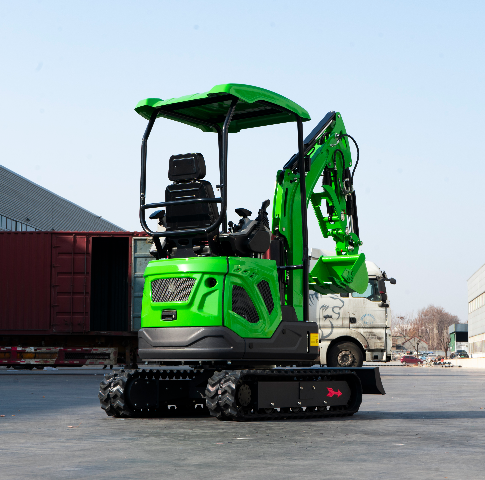
Folding ROPS and Low-Profile Cabs for Headroom-Limited Indoor Environments
In crawl spaces, basements, and parking garages, headroom can often limit excavator usage the most. To countermeasure this, many small excavators are designed with rollover protective structures (ROPS) that fold down and are designed with low-profile cabs that position the operator lower. These designs can allow excavators to operate under headroom of 6 feet. With a Folding ROPS, transport of small excavators can be conducted under low bridges or through low garage entrances. Inside the cabs, placement of fixtures prioritized the Operator's visibility, helping them avoid overhead pipes, beaming, and low ceilings. The combination of these two designs can greatly reduce the risk of contact with obstacles as it provides a safe operating solution for the operator.
Indoor Safety and Surface Protection of Compact Excavators
Newer compact excavators have undergone design changes to address indoor safety and surface protection issues. Compact excavators can now safely be utilized for renovations, basement work, and commercial interior work. Their design solves significant challenges of safety, such as toxic fume exposure and damage to flooring.
Electric Compact Excavators Have Zero Emissions (e.g., Bobcat E10e: 0 g/kWh CO/NOx)
Emissions from internal combustion engines, including compressed natural gas engines, have been extremely detrimental to indoor air quality. The Bobcat E10e, for instance, emits 0 g/kWh of carbon monoxide and nitrogen oxides. Excavators can operate indoors without toxic fume concerns, and they can work continuously without delays for ventilation in order to protect operators and occupants from the respiratory threats of CO and NOx. Diesel-powered excavators can be very disruptive and damaging to the indoor work environment, but electric drives have become much quieter, with a reduction of approximately 10 to 15 dB(A) or more, compared to their diesel-powered predecessors. This is especially true for work in hospitals, schools, and residential basements, where air quality and low noise are extremely important.
There is No Marking, Low Ground Pressure (<0.25 psi) Tracks Operating on Hardwood, Tiles and Concrete Floors.
Surface compatibility must be considered when operating on finished structures. Small excavators with rubber, non-marking tracks can distribute weight so efficiently that ground pressure can be less than 0.25 psi, the equivalent to a human footprint. Such low pressure avoids cracking, scratching, or denting delicate surfaces such as hardwood and ceramic tiles and polished concrete and epoxy floors. The non-marking tracks have tread patterns that minimize turning friction and eliminate black marks. Because of the combination of non-marking tracks and lightweight chassis, often less than 1,000 kg, these machines can be driven on finished floors without protective sheeting, which decreases set-up time and the likelihood of expensive damage.
Real World Applications of Small Excavators in Tight Spaces
Small excavators fit into spaces that larger machines cannot, which means that they can be the perfect tool for some of the most challenging tasks of all, basement renovations and urban utility trenching.
Micro Excavators Operating under Staircases for Basement Renovations
Basement renovations are particularly challenging when headroom and floor space are compact. Typically, micro excavators are less than 1.5 tons and can fit through doorways and maneuver under low staircases to do the excavation needed to dig for new footings and drainage lines. The Bobcat E10e is an example of a micro excavator with a removable ROPS and an offset boom that can excavate literally within inches of the adjacent wall. Robotic excavators of this kind eliminate the necessity of manual digging in the tight corners and can reduce the duration of a renovation by as much as 40 percent.
Utility Trenching in Urban Alleys and Landscaped Yards with Minimal Disruption
If you're looking for utility trenching in narrow urban alleys or in landscaped yards, a small excavator is a great option. Its low ground pressure—usually under 0.25 psi—prevents ruts in soft turf and pavement, making it perfect for side-stepping disruptions to surrounding surfaces. Its zero tailswing design allows it to safely operate next to fences and foundations. Compared to the days or weeks spent redoing landscaping or hardscaping to install water lines and conduits, this is a fast and efficient option.
Performance Trade-Offs: What You Gain—and Sacrifice—with a Small Excavator
Dig Depth vs. Access: How Sub-1-Tonne Models Prioritize Reach in Confined Sites Over Maximum Depth
While it's true that the absolute maximum dig depth is less than that of larger machinery, a sub-1-tonne excavator is a great fit for tight and narrow spaces. For many of the tasks associated with urban construction or basement excavation (which normally involves going through doorways), you can't really beat having a machine that's less than 36 inches wide. These machines truly liberate operators in what they can achieve in a confined space, especially since the focus on access is prioritized down to the design of the machine itself.
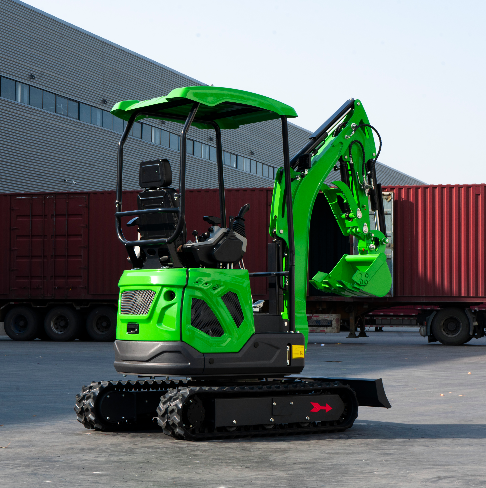
The Compact Size of Hydraulic Systems and Operator Comfort and Health
The size of a hydraulic system does not solely determine operator comfort and health. Smaller systems produce less hydraulic flow and pressure, resulting in a smaller breakout force and smaller lifting capacity. To achieve this, manufacturers may limit pump capacity to 3–6 gallons per minute. When a pump works at this limit, it can control delicate tasks, but may not be up to the task of heavy-duty digging. Operators can pick a model designed for the operating environment to maintain productivity, including models designed for light trenching, light digging, and light material handling, instead of pushing the excavator to the limits of its functionality to achieve the goal.
FAQ
What are the advantages of a zero tailswing excavator?
A zero tailswing excavator fully contains its counterweight within its track width, allowing it to make a 360° counterclockwise turn in a confined area with no concern of a collision. This allows zero tailswing excavators to need up to 60% less space than traditional excavators, allowing for deeper holes and trenches in more confined areas, increasing productivity.
The telescoping tracks on many models of small excavators, when collapsed, reach widths as small as 700 mm. This allows these small excavators to fit through a normal 36" doorway and be safely transported through residential areas.
How small can excavators be for indoor use?
Small excavators are designed with a folding ROPS, low profile cabs, non-marking tracks, and lithium batteries. These innovative designs maximize the safety and health of operators and allow these excavators to be extreme use in confined areas.
How deep of a trench can small excavators dig?
Utility trenching can be accomplished in confined spaces, as trenching and digging can be done to a depth of 4-5' with an excavator weighing less than 1 ton. This makes these excavators useful in any renovation that may be done, including the renovation of a basement.
Are small excavators damaging to fragile flooring?
Not at all. Small excavators equipped with non-marking, low-ground-pressure tracks help distribute their weight evenly, allowing them to avoid damaging hardwoods, tiles, and even concrete flooring.