
 EN
EN
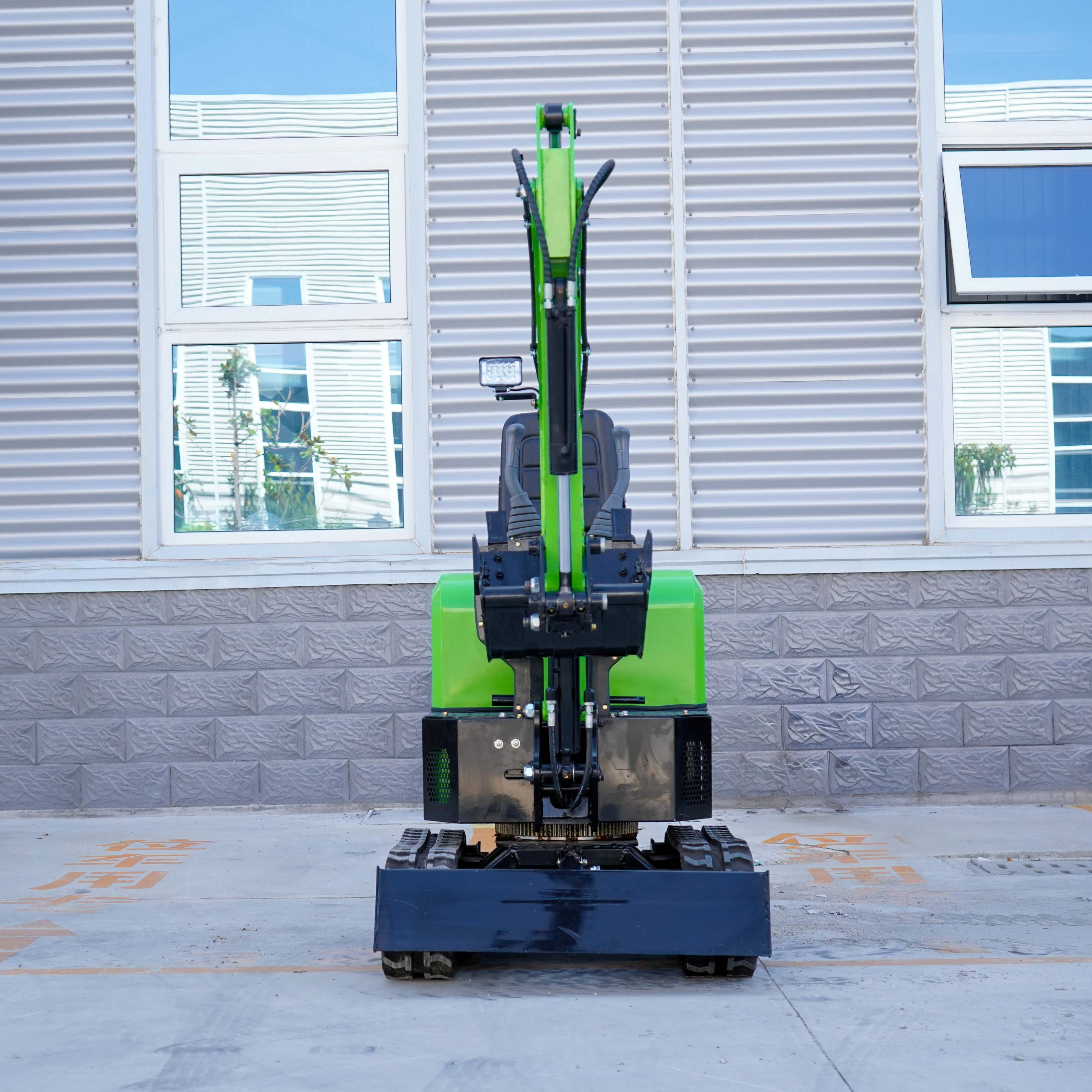
Structural Integrity: Frame Design, Lift Arm Construction, and Load Capacity Validation
Why Rated Operating Capacity (ROC) Alone Is Misleading—Tipping Load and Frame Classification Matter More
Rated Operating Capacity (ROC) is often advertised prominently, but focusing solely on this figure can mislead buyers. ROC represents the load a skid loader can lift at maximum height without tipping—under ideal, static conditions—but it doesn’t reflect real-world dynamic forces like acceleration, braking, or operation on uneven terrain. More critical to stability is tipping load: the weight required to lift the rear wheels off the ground. A tipping load ≥130% of ROC signals robust counterweight engineering and frame rigidity. Equally important is frame classification: D-frames, with their fully enclosed box-section design, demonstrate up to 40% less torsional deformation under load than open C-frames in independent structural testing. Ignoring these factors risks:
- Stability failures, especially on slopes or during aggressive bucket loading;
- Premature wear, as weak frames amplify stress at hinge points and hydraulic mounting interfaces.
Cast-Steel vs. Fabricated Lift Arms: Impact on Uptime, Repair Frequency, and Rental Fleet Longevity
Lift arm construction directly influences durability and total cost of ownership. Cast-steel arms—produced as single, heat-treated components—offer inherent advantages over fabricated (welded) alternatives:
| Feature | Cast-Steel Arms | Fabricated Arms |
|---|---|---|
| Crack Resistance | 70% higher fatigue strength due to uniform grain structure | Welds create localized stress concentrations |
| Alignment Consistency | Maintain dimensional integrity under repeated torsion | Prone to warping and misalignment over time |
| Mean Time Between Failures (MTBF) | 2,200+ hours (field-observed average) | Typically <1,500 hours |
Rental fleets using cast-steel arms report 40% fewer unscheduled repairs. While fabricated arms reduce initial acquisition cost, their lifecycle expense rises significantly due to frequent rewelding, realignment, and premature bushing replacement. For operations where uptime is non-negotiable, cast-steel remains the industry benchmark for structural integrity.
Hydraulic System Reliability: Flow Consistency, Pressure Stability, and High-Flow Readiness
High-Flow Compatibility as a Hallmark of Premium skid loader Engineering and Hydraulic Integration
High-flow auxiliary hydraulics distinguish purpose-built machines from entry-level models. True high-flow readiness means delivering 30–40 gallons per minute (GPM) consistently at pressures above 3,000 PSI—even under simultaneous lift, tilt, and drive demand. Achieving this requires oversized positive-displacement pumps, precision-ground servo valves, and reinforced hose assemblies rated for continuous high-pressure duty. Leading manufacturers integrate closed-loop hydrostatic systems with dedicated charge pumps to eliminate flow drop during multi-function operation. Simply quoting GPM is insufficient: verifying the presence of pressure-compensated flow dividers, thermal management provisions, and ISO 4406-compliant filtration reveals whether the system is engineered for sustained attachment performance—or merely marketed for it. Without this integration, operators face reduced attachment efficiency, accelerated component wear, and avoidable productivity bottlenecks.
Detecting Degradation: Leakage, Response Lag, and Pressure Drop in Hydrostatic Drive Systems
Hydraulic degradation manifests through three measurable indicators: internal leakage, response lag, and pressure drop. Internal leakage across pump pistons or valve spools reduces volumetric efficiency—causing sluggish boom and bucket movement despite full throttle input. A response lag exceeding 0.5 seconds between joystick command and actuator motion often signals worn seals, air ingestion, or fluid contamination. A pressure drop exceeding 10% of rated system pressure under load indicates pump wear, clogged filters, or failing relief valves. Operators can detect early-stage issues using timed cycle tests, in-circuit pressure gauges at key test ports, and routine fluid analysis for ferrous particulates. Proactive identification extends hydrostatic drive life by up to 35%, preserving uptime in high-cycle applications like demolition, material handling, and site prep.
Powertrain Efficiency: HP-to-ROC Ratio, Exhaust Behavior, and Non-DPF Engine Durability
HP-to-ROC Ratio as a Diagnostic Indicator of Balanced Powertrain Design and Thermal Management
The HP-to-ROC ratio is a more revealing metric of powertrain maturity than engine horsepower alone. A well-balanced design sustains high breakout force and consistent hydraulic flow without excessive thermal strain. Ratios that are too high suggest over-engineered engines paired with undersized cooling systems—wasting fuel and accelerating radiator and fan clutch wear. Ratios that are too low indicate chronic lugging, poor low-end torque delivery, and elevated exhaust gas temperatures under load. Premium manufacturers target a narrow operational band—typically 8.5–10.5 HP per 100 lbs of ROC—where coolant temperatures remain stable across 8-hour shifts and hydraulic oil stays within optimal viscosity range. This balance directly correlates with reduced unplanned downtime and extended service intervals.
White/Blue Smoke Analysis and Real-World Duty Cycle Performance of Non-DPF skid loader Engines
Exhaust smoke color offers immediate diagnostic insight into combustion health. White smoke during warm-up may indicate unburned fuel (faulty injectors) or coolant ingress (head gasket or cracked block). Blue smoke signals oil consumption—commonly from worn piston rings, valve guides, or turbocharger seals. These symptoms are especially consequential in non-DPF engines, which lack after-treatment systems to mask underlying combustion inefficiencies. Real-world duty cycle matters profoundly: machines operating continuously at 80–90% load accelerate seal carbonization and ring groove wear far faster than those used intermittently. A rigorous smoke check—performed both at cold startup and under full-load ramp-up—combined with documented usage patterns (e.g., hours per shift, typical attachment load profile), helps differentiate a durable, well-maintained engine from one nearing overhaul.
Authenticity & Service History: Fluid Condition, OEM Transparency, and Benchmarking Accuracy
Oil, Hydraulic Fluid, and Coolant Analysis: Objective Metrics for Skid Loader Health and Maintenance Discipline
Fluid analysis provides objective, quantifiable evidence of internal condition and maintenance rigor. Degradation patterns in engine oil, hydraulic fluid, and coolant reveal developing problems—including seal wear, micro-corrosion, oxidation, and viscosity loss—often 200+ hours before physical symptoms appear. Measuring Total Acid Number (TAN), water content, elemental wear metals, and ISO cleanliness codes (e.g., 18/16/13) delivers predictive insight. For example, hydraulic systems maintained with OEM-specified fluids show a 63% reduction in particulate contamination versus generic alternatives, according to the 2023 Equipment Management Report. Coolant analysis detecting glycol depletion or elevated chloride levels prevents catastrophic head gasket or cylinder liner failure. When compiled over time, these reports form an auditable maintenance record—validating service claims and exposing neglect that erodes residual value.
Manufacturer Specification Consistency: Comparing ROC, Breakout Force, and Torque Reporting Across Top Skid Loader Brands
Significant inconsistencies exist in how leading manufacturers report core performance metrics—complicating fair comparisons. Some calculate ROC at 50% of tipping load; others use 75%. Breakout force figures may reflect momentary peak pressure rather than sustainable force across the full lift arc. Torque curves—not just peak horsepower—are essential for evaluating low-rpm responsiveness during heavy material handling. Cross-referencing published specs against ISO 14397-1 test protocols reveals variances exceeding 12% for otherwise identical machine classes (2024 Construction Equipment Benchmark). Similarly, inconsistent fluid specification transparency—such as vague “API-approved” language instead of listing exact OEM part numbers or additive chemistries—correlates strongly with shorter service intervals and higher long-term maintenance costs. Buyers should prioritize brands that publish full test methodology, third-party verification, and fluid compatibility data—not just headline numbers.
FAQ Section
What is Rated Operating Capacity (ROC), and why might it be misleading?
ROC represents the maximum load a skid loader can lift at full height without tipping, under static conditions. It's misleading because it doesn't account for dynamic forces in real-world scenarios, such as uneven terrain and acceleration or braking during use.
How does tipping load impact stability?
Tipping load is the weight required to lift the rear wheels off the ground. A higher tipping load (≥130% of ROC) signals better counterweight engineering and frame rigidity, which are crucial for stability during operation.
Why are cast-steel lift arms preferred over fabricated ones?
Cast-steel arms offer greater crack resistance, alignment consistency, and extended Mean Time Between Failures (MTBF). Although fabricated arms are less expensive initially, they incur higher lifecycle costs due to frequent repairs.
What are the key metrics to check for hydraulic system reliability?
Flow consistency, pressure stability, and readiness for high-flow demands are essential. Verifying pressure-compensated flow dividers, thermal management, and filtration standards is critical to gauge the system's performance.
How can you detect hydraulic system degradation?
Degradation typically manifests through internal leakage, response lag, and pressure drops. These issues can be identified using timed cycle tests, in-circuit pressure gauges, and routine fluid analysis.
Why is the HP-to-ROC ratio important?
The HP-to-ROC ratio indicates balanced powertrain design. It helps maintain efficiency, reduce strain, and extend service intervals, targeting an operational band of 8.5–10.5 HP per 100 lbs of ROC.
What does exhaust smoke color indicate about an engine’s health?
White smoke may indicate unburned fuel or coolant ingress, and blue smoke signals oil consumption. These issues are particularly significant in non-DPF engines lacking combustion masking systems.
How can fluid analysis help in maintenance?
Fluid analysis detects wear, oxidation, corrosion, and contamination early, allowing proactive maintenance to prevent major issues and maintain the skid loader's health over time.
Why is consistency in manufacturer specifications important?
Inconsistent reporting of key metrics like ROC or breakout force can lead to misinformed buying decisions. Accuracy in specifications ensures fair comparisons and aids better long-term maintenance planning.
Table of Contents
- Structural Integrity: Frame Design, Lift Arm Construction, and Load Capacity Validation
- Hydraulic System Reliability: Flow Consistency, Pressure Stability, and High-Flow Readiness
- Powertrain Efficiency: HP-to-ROC Ratio, Exhaust Behavior, and Non-DPF Engine Durability
-
Authenticity & Service History: Fluid Condition, OEM Transparency, and Benchmarking Accuracy
- Oil, Hydraulic Fluid, and Coolant Analysis: Objective Metrics for Skid Loader Health and Maintenance Discipline
- Manufacturer Specification Consistency: Comparing ROC, Breakout Force, and Torque Reporting Across Top Skid Loader Brands
- FAQ Section
- What is Rated Operating Capacity (ROC), and why might it be misleading?
- How does tipping load impact stability?
- Why are cast-steel lift arms preferred over fabricated ones?
- What are the key metrics to check for hydraulic system reliability?
- How can you detect hydraulic system degradation?
- Why is the HP-to-ROC ratio important?
- What does exhaust smoke color indicate about an engine’s health?
- How can fluid analysis help in maintenance?
- Why is consistency in manufacturer specifications important?