
 EN
EN
Environmental Advantages Driving Electric Forklift Adoption
Zero tailpipe emissions and measurable greenhouse gas reduction in warehouse operations
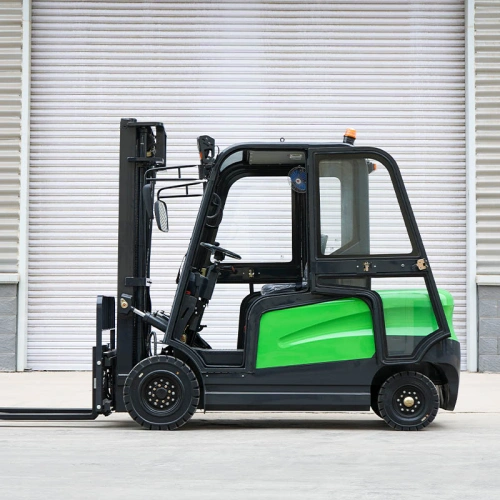
Electric forklifts eliminate direct emissions at point-of-use—removing CO₂, NOx, and particulate matter from indoor operations entirely. This delivers immediate air quality improvements in enclosed warehouse environments, where combustion-powered alternatives pose persistent health and compliance risks. Facilities transitioning to all-electric fleets report up to 30% lower Scope 1 emissions, according to peer-reviewed logistics sustainability studies published by the International Journal of Logistics Management. These reductions directly advance corporate net-zero commitments and position operations ahead of tightening regional regulations—including upcoming EU and California air quality mandates.
Noise reduction enabling safer, more productive e-commerce fulfillment centers
Electric forklifts operate at 70–80 dB—significantly quieter than ICE models (90+ dB)—reducing auditory fatigue by approximately 40%, per occupational health research cited by the National Institute for Occupational Safety and Health (NIOSH). In high-velocity e-commerce fulfillment centers, this acoustic advantage supports clearer verbal coordination during precision order picking, lowers miscommunication incidents, and helps operators sustain focus across extended shifts. The result is not only improved safety but also measurable gains in picking accuracy and throughput.
Improved indoor air quality and direct worker health benefits versus ICE forklifts
Replacing ICE forklifts eliminates on-site generation of carbon monoxide, nitrogen dioxide, and other hazardous exhaust compounds—major contributors to respiratory illness among material handling professionals. A 2023 study by the American College of Occupational and Environmental Medicine found facilities that fully electrified their forklift fleets saw a 60% reduction in ventilation-related energy use and a 22% average decline in short-term absenteeism linked to respiratory complaints. These outcomes reflect both ethical responsibility and operational resilience: healthier workers mean fewer disruptions and more consistent labor availability.
Regulatory and ESG Forces Accelerating the Shift to Electric Forklifts
Decarbonization mandates (EU Green Deal, US EPA warehousing guidance) accelerating fleet electrification
Regulatory pressure is now a primary catalyst for fleet electrification. The EU Green Deal’s “Fit for 55” package includes binding emissions targets for industrial equipment used in logistics facilities, while the U.S. Environmental Protection Agency’s 2023 Warehousing Sector Guidance explicitly identifies ICE forklifts as a priority source for near-term decarbonization. Non-compliant facilities face escalating fines, permitting delays, and exclusion from public-sector supply chains. For multinational distributors, aligning with these standards isn’t just about risk mitigation—it’s foundational to maintaining market access.
Government incentives and total cost of ownership (TCO) advantages in green warehousing
Federal and state-level incentives—including the U.S. Inflation Reduction Act’s 30% investment tax credit for qualified electric material handling equipment—significantly narrow the upfront cost gap. When combined with lower lifetime expenses—no fuel, reduced maintenance, and longer service intervals—electric forklifts deliver superior TCO over a standard seven-year lifecycle. Analysis by the Council of Supply Chain Management Professionals (CSCMP) confirms electric fleets achieve breakeven within 3.2 years on average, after factoring in rebates, energy savings, and avoided downtime. This economic predictability, layered with regulatory alignment, makes electrification a strategic imperative—not just an environmental gesture.
Key Technological Enablers: Lithium-Ion Batteries and Smart Controls
Lithium-ion vs. lead-acid: 40% longer runtime, 80% less maintenance, and 2x cycle life
Lithium-ion batteries have redefined electric forklift viability—delivering 40% longer runtime per charge, eliminating battery swaps across multi-shift operations. Maintenance drops by 80% compared to lead-acid systems: no watering, no acid leaks, no equalization charging. Most critically, lithium-ion units exceed 2,000 full charge cycles before meaningful capacity loss—more than double the typical 1,000-cycle lifespan of lead-acid. This durability reduces replacement frequency, cuts hazardous waste disposal needs, and improves asset utilization. Integrated smart battery management systems (BMS) continuously monitor cell voltage, temperature, and state of charge, preventing thermal runaway and optimizing recharge timing—even during brief breaks. With full charging in under one hour—and no mandatory cooling period—lithium-ion enables true 24/7 uptime in high-demand logistics hubs.
Seamless Integration of Electric Forklifts into Digital Logistics Ecosystems
Interoperability with AMRs, WMS platforms, and IoT-enabled distribution centers
Electric forklifts are inherently compatible with modern digital infrastructure—unlike legacy ICE models, which lack standardized communication protocols. Their native connectivity supports seamless integration with Automated Mobile Robots (AMRs), Warehouse Management Systems (WMS), and enterprise IoT platforms. This interoperability enables real-time telemetry sharing—such as location, load status, battery level, and task completion—creating a unified operational view across the facility. Industry leaders report integrated electric fleets respond 30% faster to dynamic workflow changes, such as surge orders or inventory relocations, compared to siloed systems. As warehouses evolve toward autonomous distribution centers, electric forklifts serve as intelligent nodes—coordinating with robotic systems, adjusting routes based on live data, and optimizing material flow without manual intervention. Their role extends beyond lifting: they’re central data hubs in Industry 4.0 ecosystems, bridging physical execution with digital decision-making.
FAQ
What are the main environmental benefits of electric forklifts?
Electric forklifts eliminate CO₂, NOx, and particulate matter emissions at the point of use, improving air quality and contributing to reduced Scope 1 greenhouse gas emissions.
How do electric forklifts improve worker safety in warehouses?
They operate at lower noise levels (70–80 dB) compared to ICE models, reducing auditory fatigue, and eliminate exposure to harmful exhaust compounds, which can cause respiratory illnesses.
How do lithium-ion batteries enhance electric forklift performance?
Lithium-ion batteries provide longer runtime, drastically reduced maintenance needs, and extended cycle life, enabling continuous operation and improving energy efficiency.
What regulatory pressures are driving fleet electrification?
Mandates like the EU Green Deal and US EPA guidelines target emissions reductions in logistics facilities, with fines and restricted market access for non-compliance.
Are there economic advantages to adopting electric forklifts?
Yes, monitoring programs show superior total cost of ownership due to lower fuel and maintenance costs, coupled with government incentives like tax credits.
Table of Contents
- Environmental Advantages Driving Electric Forklift Adoption
- Regulatory and ESG Forces Accelerating the Shift to Electric Forklifts
- Key Technological Enablers: Lithium-Ion Batteries and Smart Controls
- Seamless Integration of Electric Forklifts into Digital Logistics Ecosystems
-
FAQ
- What are the main environmental benefits of electric forklifts?
- How do electric forklifts improve worker safety in warehouses?
- How do lithium-ion batteries enhance electric forklift performance?
- What regulatory pressures are driving fleet electrification?
- Are there economic advantages to adopting electric forklifts?