
 EN
EN
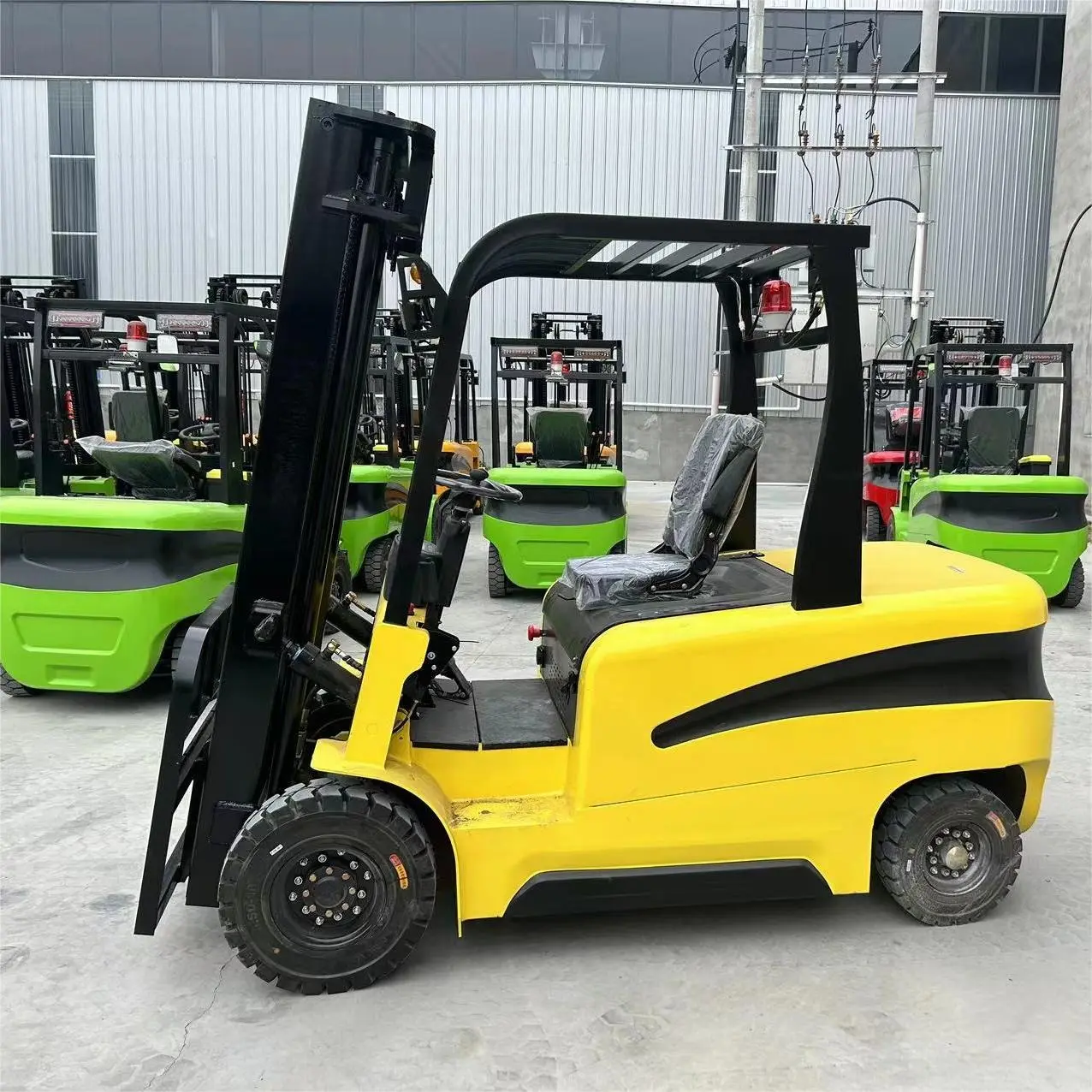
Mastering Forklift Stability: The Physics of Load Center and Center of Gravity
For warehouse managers and forklift operators, the safe operation of a forklift is not simply a matter of staying within the rated weight capacity. The true foundation of forklift safety lies in the physics of stability. Every lift, every turn, and every movement of the mast changes the dynamic balance of the machine. The key to understanding this balance is the concept of the center of gravity. When a load is lifted, the center of gravity of the forklift and the load combine and shift forward. If this combined center of gravity moves outside a specific zone, the forklift will tip over. This zone is known as the stability triangle. The principles that govern this stability are not optional guidelines; they are fundamental laws of physics. By mastering these principles, operators can prevent tip-overs, protect valuable inventory, and ensure their own safety.
The Center of Gravity and the Stability Triangle
Every object, whether it is a steel beam or a pallet of boxes, has a center of gravity. This is the single point where its weight is evenly balanced. An unloaded forklift has its center of gravity low and centrally located, which provides a stable base. When a load is placed on the forks and raised, the combined center of gravity of the forklift and the load begins to shift. It moves forward and upward. The forklift remains stable as long as this combined center of gravity stays within the stability triangle. The stability triangle is an imaginary zone defined by the two front wheels and the rear axle pivot. As long as the combined center of gravity remains inside this triangle, the forklift is stable. If it moves outside this zone, a tip-over is imminent. This is a fundamental physical reality that cannot be ignored.
Why Rated Capacity is Not the Full Story
The rated capacity printed on the side of a forklift is a laboratory-derived value. It is calculated using a standardized load under ideal conditions. Real-world conditions are rarely ideal. The rated capacity assumes a specific load center distance, which is the horizontal distance from the mast face to the center of gravity of the load. If the load is longer, or if it is not centered on the forks, the actual load center distance increases. Even a small increase in the load center distance can dramatically reduce the safe lifting capacity. A forklift rated to lift five thousand pounds at the standard load center might only be able to safely lift four thousand pounds if the load is longer and its center of gravity is further out. This is not a product defect; it is a consequence of the physics of leverage. As the load center distance increases, the moment arm that is pulling the forklift forward becomes longer, and the counterweight's stabilizing effect is reduced.
The Real-World Impact of Load Center Distance
The effect of a changing load center distance is a critical safety concept. A simple rule of thumb is that a ten percent increase in the load center distance results in roughly a ten percent decrease in effective capacity. This means that a seemingly small change in how a load is positioned can have a significant impact on stability. For example, extending the load center by just a few inches can reduce the safe capacity by hundreds of pounds. This is a critical consideration when handling long items like pipes or lumber, or when using attachments that extend the reach of the forks. In many safety audits, incidents involving load drops or tip-overs are traced back to operators who underestimated the effect of a slightly longer load center. Always measuring the actual load center and consulting the forklift's capacity chart before every lift is the only reliable way to ensure that the lift is within safe limits.
The Dangers of Unbalanced Loads
The center of gravity is not always perfectly centered. When a load is unbalanced, or when its weight is not distributed evenly, its center of gravity shifts to one side. This lateral shift pushes the combined center of gravity of the forklift and the load closer to the edge of the stability triangle. The risk of a side-tip is significantly increased, especially when turning or traveling on uneven surfaces. Oversized loads, such as steel coils or machinery with asymmetric mass, are particularly hazardous. Even if the total weight of the load is within the rated capacity, an off-center center of gravity can make the lift unstable. Operators must be trained to assess the weight distribution of every load before lifting.
Safe Handling Practices for Irregular Loads
Managing irregular loads requires a disciplined approach. The first step is to assess the load before lifting. The operator should calculate the actual center of gravity of the load and verify it against the capacity chart. If the load is irregular, it should be secured with straps or blocking to prevent it from shifting during movement. The mast should be tilted back slightly to cradle the load against the backrest. This action shifts the combined center of gravity rearward, improving stability. When traveling with a load, it should be kept as low as possible, ideally just a few inches above the ground. This lowers the overall center of gravity, which increases resistance to tipping. The operator should also avoid sudden acceleration, braking, or sharp turns, as these maneuvers create inertial forces that can push the center of gravity outside the stability triangle.
How Modern Technology Enhances Stability
Modern forklifts are equipped with advanced safety systems that actively support the operator. Overload sensors provide audible and visual alarms if the load exceeds the rated capacity before the mast is raised. Stability control systems continuously monitor the mast tilt angle, travel speed, and turning radius. If the system detects a condition that could lead to instability, it can intervene automatically by limiting the mast tilt, reducing engine power, or applying selective braking. These electronic systems act as a vital safety net, responding faster than human reaction time. However, technology is not a substitute for training. Operators must still understand the physics of stability and apply safe handling practices. The combination of a well-trained operator and a technologically advanced forklift provides the highest level of safety.
The Role of the Operator in Maintaining Stability
The most important factor in forklift safety is the skill and awareness of the operator. No amount of technology can replace an operator who understands the principles of leverage and center of gravity. A skilled operator always checks the load center, travels with the load low, and avoids aggressive maneuvers. They are constantly aware of the dynamic balance of the machine. This awareness is developed through comprehensive training and reinforced by daily practice. Regular refresher courses and practical evaluations help to keep safety at the forefront of every operator's mind.
How Quality Engineering Supports Safe Operation
The inherent stability of a forklift is rooted in its engineering design. The placement of the counterweight, the geometry of the mast, and the responsiveness of the hydraulic system all contribute to the machine's ability to maintain stability under load. Manufacturers who adhere to recognized quality standards, such as ISO 9001, subject their designs to rigorous testing to ensure that they perform safely under a wide range of conditions. For a warehouse manager who is investing in a fleet of forklifts, partnering with a disciplined, quality-focused manufacturer provides the ultimate confidence that the equipment is engineered for stability and safety.