
 EN
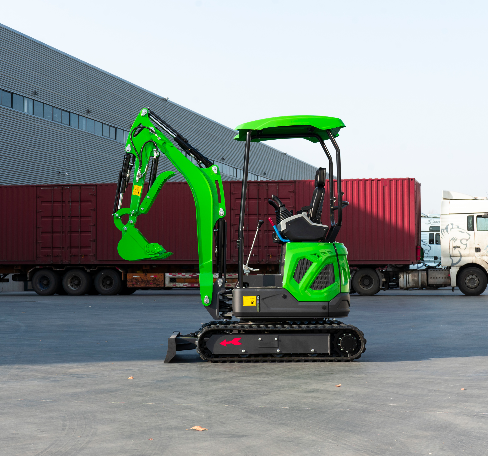
Buying Cheap Mini Excavators
Purchasing a mini excavator in the 1-6 ton range can help smaller contractors get into the industry, but only if the excavator’s duty cycle is not limiting. If the duty cycle is not limiting, the purchaser can save money, but if it is not maintained and serviced locally, the purchaser can lose money quickly. Emissions compliance should be verified, and import hours should be as low as possible.
What a Budget One to Six Tonne Excavator Can Actually Do
A budget mini excavator is not a small excavator that can be used for demolition; it is more of a utility tool. Knowing its limitations helps prevent failures. A compact excavator in the one to six ton range has strict mechanical limits.
A micro excavator in the two to four tonne range can have an average dig depth of 5 to 7 feet, and a bucket breakout force of up to 4,000 pounds. A mid range excavator in the two to three tonne range can reach a dig depth of 10 feet with a bucket breakout force of 7,000 pounds. Larger machines up to six tonnes can reach up to 14 feet.
A cheap mini excavator typically utilizes a constant-displacement gear pump instead of a load-sensing variable-displacement piston pump. Gear pumps are cheaper to replace; however, piston pumps are far more efficient and can perform multiple functions (e.g., swing while boom is elevated). Working with a gear pump system, a mini excavator operator would experience a power and speed decrease, and would not be able to boom up and swing while curling the bucket.
Another advantage of mini excavators with weight under 3,500 kg is their improved transportability. Many small contractors and utility operators (landscaping, line clearing, etc.) are profit-constrained and dependent on flexible, rapid deployment. Keeping the total weight of the mini excavator, trailer, and attachments below 3,500 kg provides a number of benefits: 1) travel on standard (non-commercial) driver’s licenses, 2) a standard (non-commercial) pick-up truck can pull the 10,000 lb. utility trailer with the mini excavator, and 3) ease of transport over residential driveways and suburban cul-de-sacs.
The true costs of owning a piece of capital equipment is often hidden and understood after the purchase. The total cost of ownership (TCO) analyzes the three main ways to acquire a piece of capital equipment (lease, rent, buy) before capital is committed. The monthly cost of ownership is often hidden; for example, buying a machine may have a lower upfront cost, but monthly rental costs may be lower.
New, rising brands in construction equipment may sell for less, but they can carry high risk of proprietary parts, no dealer support, or no local dealers at all. Certified used machines have higher upfront costs, but include a full manufacturer’s warranty, support, and a low risk of immediate repairs. Gray market machines can be really inexpensive, but can also have no parts support, no warranty, and can have EPA bans.
Many off-brand excavators have proprietary hydraulic seal kits and bearings and travel motors. With major brands, local hose shops can easily replace a blown hose. With off-brand equipment, the fittings may have non-standard threads and can take weeks for a replacement to be shipped.
Field Case Study: The High Cost of a Cheap Import
A landscape contractor bought a brand new, unbranded 1.8 tonne mini excavator for approximately $22,000 to use for residential retaining walls and French drain installations.
During the second week of use, while excavating dense, hard-packed clay, an auxiliary hydraulic line failed due to a blown O-ring and fitting on the boom cylinder. The excavator had non-standard, Japanese Industrial Standard (JIS) fittings, and the contractor was unable to source a replacement.
It was idle for 18 days while a replacement manifold was sourced and shipped from Asia. The contractor had to rent a unit for $1,200 to complete the project. The idle time also caused them to miss to two subsequent residential grading jobs, resulting in a loss of $5,000 in revenue. By the time the unit was operational again, the cost of the $22,000 excavator had increased to $29,000, showing the risk of buying equipment without local dealer support.
Before purchasing any budget-class mini excavators, ensure the EPA Tier 4 Final, or equivalent EU Stage V engine is permanently riveted to the engine block. The roll-over protective structure also needs to be ISO 12117-2 certified, and have a serial number plate. Inspect the hydraulic pump to ensure it provides 8 to 12 gpm of auxiliary flow. Lastly, inspect the rubber tracks to ensure the use of continuous steel cord to prevent premature edge cracking.