
 EN
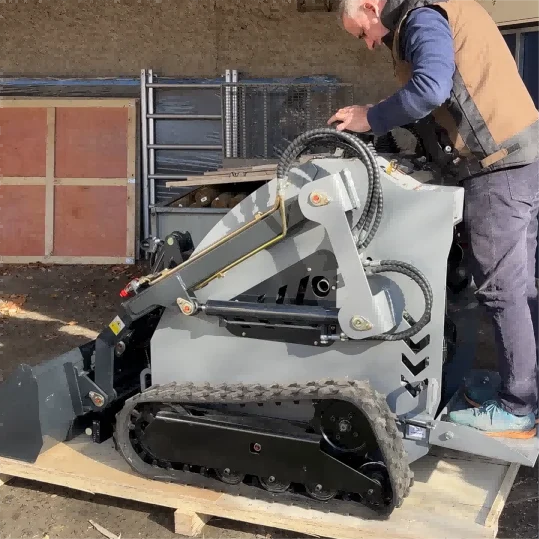
For a homeowner weighing compact equipment, the practical question is not how much a machine can lift in a perfect test, but how much it should lift during real weekend work. A household mini skid steer typically fits the 200–450 kg rated operating class, which handles soil, mulch, and small materials without overwhelming a narrow driveway or a fragile lawn. Choosing the right small capacity keeps the machine stable, easy to control, and affordable to run. The following guidance explains why a modest rating beats a heavy one for residential chores.
Why rated capacity matters more than peak lifting for home use
How rated capacity differs from tipping load on small residential jobs
A mini skid steer carries two different numbers in its manual: the rated operating capacity and the tipping load. The rated figure is roughly half of the tipping load, and that gap is the built-in safety margin. On a backyard project, soft ground, a side slope, or a raised boom can shift the center of gravity. Staying near the rated capacity, not the higher tipping limit, prevents the loader from becoming unstable when the operator turns or lifts a load unevenly. The hydraulic system works efficiently inside this rated window, so the engine and pump stay dependable at home.
The safety margin that protects a household operator
Residential yards hide hazards that construction sites rarely present: buried irrigation, low tree roots, and uneven patios. A mini skid steer rated for a modest load reacts predictably when one wheel drops. ANSI and ISO stability guidance both assume operators keep loads low and centered, so the rated capacity is a practical everyday limit rather than a laboratory maximum. A smaller household loader also travels slower and turns tighter, reducing the chance of a rollover near children or pets. Ground pressure stays low, protecting a fragile lawn during repeated passes.
Matching small capacity to common backyard projects
Moving soil, mulch, and firewood around the yard
For these yards, a mini skid steer in the 250–350 kg class moves a few cubic feet of topsoil, a stack of firewood, or bags of mulch in one or two passes. The compact equipment fits through a 36-inch gate and spreads material without rutting a planted bed. Oversizing to a 900 kg class only compacts the soil, damages the lawn, and raises the operating cost without speeding the job. Most homeowners overestimate how much they lift in a season; matching the small capacity to real tasks keeps the machine useful and the yard intact.
Light trenching and post-hole work near the home
A mini skid steer with a narrow chassis keeps traction on damp grass and reaches tight corners where a larger unit cannot maneuver. Shallow trenching for a sprinkler line or fence posts is another common backyard project. Here the hydraulic power and ground pressure matter more than raw lift. The operator controls depth with the boom, not with brute force, so precision stays high and rework stays low. Low machine weight also means the turf recovers faster once the work is finished and the loader is parked for the day.
A real residential case: taming a weekend backyard rebuild
Background and the problem with an oversized rental
A family in a suburban lot planned to regrade a sloped yard, build a small retaining wall, and lay a garden path. They first rented a heavy commercial skid steer rated near 900 kg. The machine was too wide for the side passage, crushed the edging, and the operator felt unsafe on the slope. The project stalled after one day, with damaged turf and no retaining wall started. That early setback showed that more capacity does not mean a better result on a confined residential property with limited access.
Solution with a right-sized household loader and results
They switched to a household mini skid steer in the 300 kg class with rubber tracks and a low ground pressure footprint. The smaller machine entered through the gate, climbed the gentle slope with steady traction, and placed wall blocks without compacting the soil. By the second weekend the regrade, wall, and path were complete. The right-sized capacity turned a stalled job into a finished backyard project with far less stress, and the family kept the loader for ongoing seasonal chores around the home.
How to choose, inspect, and maintain a practical residential loader
What to check before buying a small capacity machine
Before purchase, confirm the rated operating capacity, not just the tipping load, and match it to the heaviest regular task. Inspect the undercarriage, check the hydraulic hoses for wear, and verify the diesel engine starts cleanly. Ask whether the model carries CE marking and meets local OSHA-aligned workplace expectations for a residential operator. A mini skid steer with the correct rated capacity and a modular design helps future servicing, while a crawler undercarriage suits soft lawns better than steel wheels. Test the controls and visibility before committing to a unit.
Operating and maintenance habits that preserve stability
Keep loads low and centered, avoid sudden turns on slopes, and never exceed the rated capacity. Routine maintenance keeps the loader dependable: check track tension, clean the radiator, and service the hydraulic fluid on schedule. Store the machine on level ground and review the manual before each season. These habits protect stability, extend durability, and keep the versatile machine ready for the next backyard project. A short pre-use walkaround catches leaks and worn parts before they become costly failures during active work.
A household mini skid steer in the 200–450 kg rated class delivers the most practical load capacity for typical residential work. Matching the small capacity to real backyard tasks preserves stability, limits ground damage, and controls the operating cost. Selecting the right rating, inspecting it carefully, and maintaining it well lets a homeowner finish projects safely and confidently. The modest machine proves that the right size, not the biggest rating, serves a home most effectively.
Frequently Asked Questions
Question
What rated capacity suits a typical residential yard?
Answer: A household mini skid steer in the 200–450 kg rated class fits most yards. That range moves soil, mulch, and firewood without rutting lawns or stressing a side slope. Heavier commercial units often exceed the gate width and raise the operating cost. Match the rating to the heaviest regular task, keep loads low, and the machine stays stable, predictable, and easy for a part-time operator to control safely through every weekend job.
Question
How does rated operating capacity differ from tipping load?
Answer: The rated operating capacity is roughly half of the tipping load and represents the safe everyday limit. The tipping load is the point where the machine would overturn in a test. Residential yards add slopes, soft ground, and offset loads that lower real-world stability. Staying at or below the rated figure keeps the loader predictable when the boom lifts or the operator turns on uneven terrain near the home and family.
Question
Which backyard tasks need only a small capacity loader?
Answer: Light backyard jobs such as moving mulch, spreading topsoil, carrying firewood, and shallow trenching for sprinklers need only a 200–350 kg class. These tasks value maneuverability and low ground pressure more than raw lift. A compact loader reaches tight gates and planted beds without damage. Larger ratings add weight and cost with no benefit for occasional home use, so a small capacity matches the actual workload.
Question
Is a heavier machine safer than a lighter household loader?
Answer: A heavier machine is not automatically safer for home use. Extra weight increases ground damage, reduces maneuverability in tight yards, and raises the risk if a slope or soft patch gives way. A right-sized household loader keeps the center of gravity low and the operator in control. Safety comes from matching capacity to the task and following stable operating habits, not from buying the largest available rating on the market.
Question
When should the load rating be rechecked during home use?
Answer: Recheck the practical load rating whenever the job changes, the ground is wet or frozen, or a slope steeper than usual appears. Soft terrain lowers real capacity, and an offset load shifts the center of gravity. Inspect the undercarriage and hydraulic system first, then keep loads low and centered. Reviewing the manual before each season also confirms the safe limit, so the machine stays dependable across changing backyard conditions.