
 EN
EN
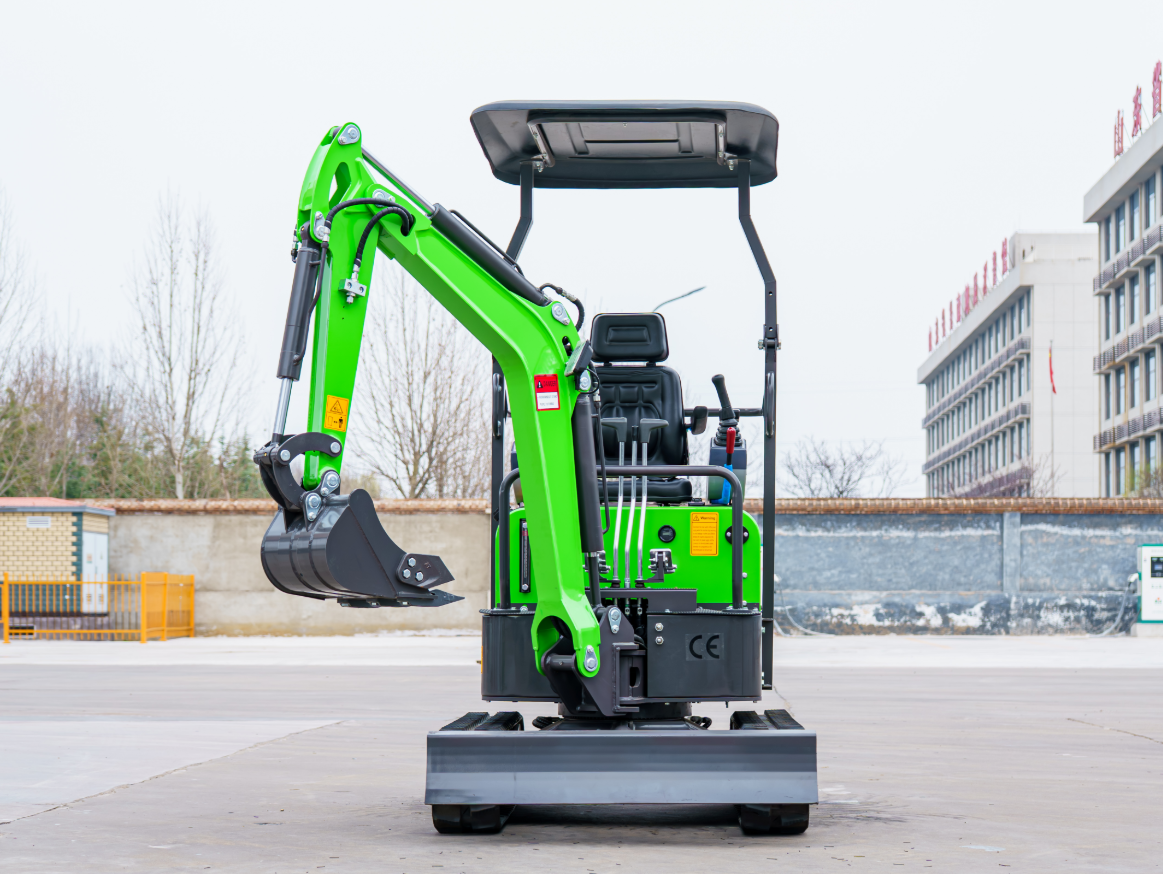
High-Tensile Steel Alloys and Heat-Treated Joints for Excavator Load Resistance
The foundation of a durable excavator lies in its metallurgy.
-
High-Tensile Steel Alloys: Commonly featuring yield strengths exceeding 500 MPa, these alloys are the industry standard for booms and arms, resisting deformation under extreme torsional and bending forces during heavy lifting or breakout operations.
-
Heat-Treated Cast Steel Joints: At critical pivot points, quenching and tempering deliver a hardened, wear-resistant surface while preserving ductility in the core—preventing brittle fracture.
This dual-character design enables even shock-load distribution and minimizes stress concentrations that lead to cracking, ensuring dimensional integrity endures daily impact.
Fatigue-Resistant Welding and FEA-Validated Design for Long-Term Reliability
Long-term structural reliability begins at the weld seam.
-
Full-Penetration Welding: Creates joints often stronger than the base metal, while post-weld heat treatment relieves residual stresses that can initiate fatigue cracks.
-
FEA-Validated Simulation: Crucially, the entire frame is validated using Finite Element Analysis (FEA)—a dynamic simulation that maps stress distribution across real-world operating conditions.
Engineers use these insights to reinforce high-stress zones—adding internal gussets or thickened plates—before prototyping. This virtual iteration yields a lightweight yet exceptionally durable framework capable of maintaining structural integrity over tens of thousands of operating hours.
Hard-Working Undercarriage: Track Systems and Terrain-Adaptive Durability
Reinforced Upper/Lower Frames and Weight Distribution
Robust undercarriages start with thickened upper and lower frames fabricated from high-tensile steel in box-section profiles.
-
Ground Pressure Reduction: Wider track gauges and extended track-on-ground length spread mass over a larger contact area—reducing ground pressure by up to 50% versus standard configurations.
-
Stability on Soft Ground: On marshy or saturated soils, this lower pressure prevents sinking and limits sidewall soil disturbance that contributes to track slippage.
Counterweight placement and center-of-gravity optimization further stabilize the upper structure during full-reach digging, curbing sudden tilting that strains undercarriage joints.
Wide Track Shoes, Recessed Fasteners, and Protective Covers
-
Wide Track Shoes: Provide essential flotation across loose sand, mud, or unstable substrates—broadening load distribution and minimizing rutting.
-
Recessed Fasteners: Sit flush with the shoe surface, eliminating protrusions that could snag on roots or rocks and shear bolts.
-
Sealed Protective Covers: Block abrasive dust and moisture over the track adjuster, idler, and sprockets—slowing pin and bushing wear and dampening chain-induced vibration.
Environmental Sealing and Thermal Protection for Operational Resilience
Dual-Lip Slew Ring Seals and Grease Bath Design
The slew ring—a pivotal component enabling upper-structure rotation—is highly vulnerable to contamination.
-
Cascading Defense: Dual-lip seal systems counter this with an outer lip that deflects large particles and an inner lip that captures any bypassing material.
-
Pressurized Grease Bath: Continuous replenishment of heavy-duty grease lubricates bearing surfaces and generates outward pressure that actively repels moisture and fine silica dust.
As detailed in a 2024 study on slew ring sealing technology, advanced lip geometries have reduced bearing contamination failures by over 60% in mining applications.
IP69K-Rated Electrical Harnesses and Cold-Weather Winterization
-
IP69K-Rated Connectors: Meet the demand for high-pressure, high-temperature washdowns (certifying protection against close-range spray at 100 bar/1450 psi at 80°C) and total dust ingress, preventing ground-fault errors.
-
Cold-Climate Winterization: Integrated packages—including engine block heaters, hydraulic pre-heaters, battery thermal wraps, and ether-start injection—ensure fluid viscosity remains optimal. Field studies show these packages reduce hydraulic pump failures by 45% during the first 60 days of winter.
Contamination-Resistant Hydraulic System Design for Excavator Longevity
The hydraulic system functions as the excavator’s circulatory network; research confirms 70–80% of hydraulic failures stem directly from particle ingress.
-
Multi-Stage Filtration: High-efficiency return-line filters rated at Beta 10 ≥ 200 capture 99.5% of particles ≥10 microns, while a kidney-loop circuit enables continuous offline purification.
-
Pressurized Reservoirs & Wipers: Desiccant breathers prevent moisture and dust intake as fluid volume fluctuates. Cylinder rod sealing employs a multi-lip polyurethane wiper backed by a rod buffer seal.
-
Cleanliness Monitoring: Paired with scheduled oil analysis targeting ISO 4406 cleanliness codes, this layered defense transforms hydraulic maintenance into a predictable, controlled practice.
Frequently Asked Questions (FAQ)
-
Q: What materials are commonly used in excavator booms and arms for durability? A: High-tensile steel alloys with yield strengths exceeding 500 MPa are industry-standard, along with heat-treated cast steel for critical pivot points.
-
Q: How does FEA contribute to excavator design reliability? A: Finite Element Analysis (FEA) simulates real-world stress distribution to identify high-stress zones, allowing engineers to reinforce them for long-term durability.
-
Q: What makes the excavation track systems terrain-adaptive? A: Reinforced frames, wide-track shoes for load distribution, and protective covers ensure stability and resistance across soft, abrasive, or waterlogged terrain.
-
Q: How do cold-weather winterization packages enhance excavator performance? A: Winterization packages include hydraulic pre-heaters, block heaters, battery wraps, and ether-start systems to ensure optimal component function in cold climates.
-
Q: Why is hydraulic system contamination a critical issue? A: Contaminants lead to abrasive wear, causing failures in components like pumps and valves. Multi-stage filtration and advanced protection prevent this.
Table of Contents
- High-Tensile Steel Alloys and Heat-Treated Joints for Excavator Load Resistance
- Fatigue-Resistant Welding and FEA-Validated Design for Long-Term Reliability
- Hard-Working Undercarriage: Track Systems and Terrain-Adaptive Durability
- Environmental Sealing and Thermal Protection for Operational Resilience
- Contamination-Resistant Hydraulic System Design for Excavator Longevity
- Frequently Asked Questions (FAQ)