
 EN
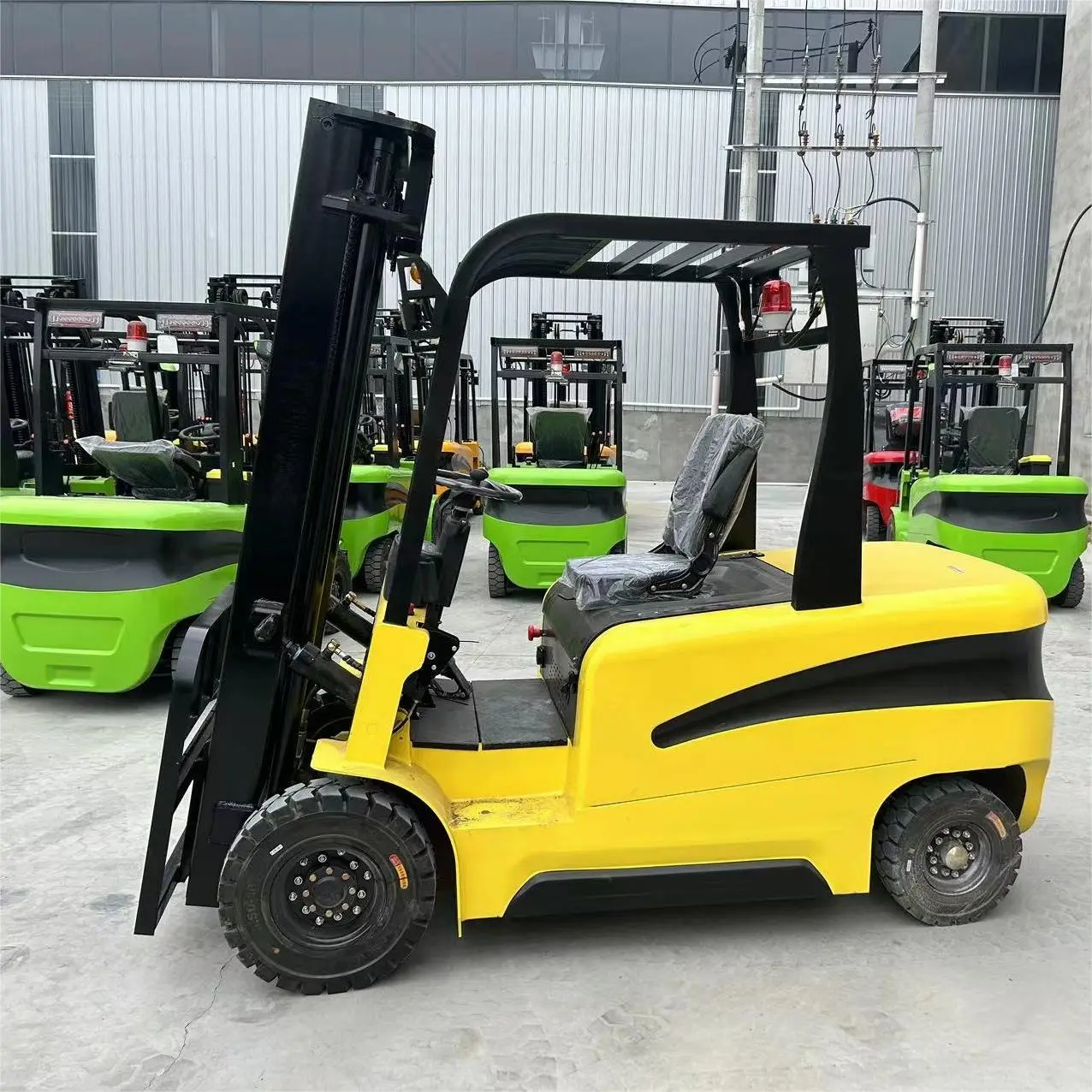
Sizing and Maneuvering Mini Forklifts: Warehouse Layout Optimization and Safety Engineering
Key Takeaway: Transitioning to mini forklifts (0.45 to 1.36-tonne capacity) allows logistics facilities to compress active aisle widths from 3.0m down to 1.4m, reclaiming up to 42% of dedicated floor space. To achieve these gains safely and legally, fleet buyers must align mast selection with structural ceiling heights, match tire compounds to surface dynamics, and strictly adhere to ANSI/ITSDF B56.1 and OSHA 1910.178 safety engineering standards.
⚖️ Footprint and Floor-Space Savings: The Physics of Compact Material Handling
A mini forklift’s primary value lies in its spatial efficiency. Sizing these units requires analyzing the correlation between chassis width, load center, and the minimum operational parking footprint.
Standard electric mini forklifts compress heavy counterbalance components into a condensed frame:
-
Chassis Width: Typically measures 900 mm to 1,050 mm, compared to 1,200 mm to 1,400 mm for standard counterbalance trucks.
-
Turning Radius: Tightened to 1,500 mm to 1,800 mm, allowing pivot-on-axis maneuvering.
-
Parking Footprint: Consumes only 1.8 to 2.6 square meters of floor space when parked with the mast lowered, saving up to 42% in dedicated charging bay area compared to standard electric counterbalance models.
This dimensional compaction allows logistics planners to establish dedicated parking and charging bays as narrow as 1.52 meters. Over a fleet of ten vehicles, this reclaims approximately 60 to 80 square meters of high-value industrial floor area, which can be reallocated directly to staging zones or extra rack rows.
Maneuverability and Zero-Turn Steering in Very Narrow Aisles (VNA)
Operating in corridors below 1.6 meters removes any margin for steering error. Mini forklifts utilize specific mechanical and electronic steer-by-wire configurations to maintain throughput.
Dual-Drive Zero-Turn Steering
Unlike standard three-wheel trucks that rely on a single steer wheel at the rear, advanced mini forklifts utilize independent dual-drive AC motors on the front axle synchronized with a rear steer wheel that turns a full 90 degrees.
When the operator initiates a tight turn, the inner drive wheel automatically reverses rotation while the outer wheel drives forward. This allows the truck to pivot on its exact center point, reducing the turning circle by up to 40% and eliminating the need for multi-point backing maneuvers.
Articulated and Swing-Mast Mechanics
For high-density storage, some mini forklifts feature articulated chassis or swing masts. Rather than turning the entire forklift carcass perpendicular to deposit a pallet, the mast assembly rotates 180 degrees and shifts laterally. This design allows operators to load and unload pallets in aisles as narrow as 1.4 meters, reducing rack face impacts by up to 22% while maintaining stable load center ratings.
Engineering Classifications: Mini Forklift Types and Configurations
To optimize warehouse layout, fleet managers must match the specific drive, mast, and steering configuration to their structural racking setup.
| Forklift Configuration | Average Capacity Range | Minimum Operating Aisle | Best Applied In |
|---|---|---|---|
| Walk-Behind Stacker | 1,000 to 2,000 lb | 1.8m to 2.2m | Low-frequency staging, mezzanine loading, retail backrooms. |
| Stand-Up Rider Counterbalance | 2,000 to 3,000 lb | 1.6m to 1.8m | High-throughput docks, cold storage aisles, double-deep racking. |
| Articulated VNA Truck | 3,000 to 4,000 lb | 1.4m to 1.6m | High-bay warehouses, manufacturing cells, narrow aisle retrofits. |
Mast Performance Metrics
Selecting a duplex (two-stage) or triplex (three-stage) mast dictates both maximum lift height and collapsed height. For facilities with low mezzanine clearance, a triplex mast with high free-lift capabilities is required. This configuration allows the carriage to raise the forks up to 1.5 meters off the ground before the inner mast stages extend vertically, preventing overhead collisions with lighting fixtures or sprinklers.
Field Case Study: Resolving Rack Deflection and Steering Collisions
A third-party cold-storage provider in Wisconsin operating a 5,000-square-meter frozen food distribution hub experienced a 15% drop in order-picking throughput due to heavy rack-upright damage in their 1.8-meter-wide aisles.
The operators were utilizing standard fixed-mast reach trucks. In the tight freezing lanes, steering around structural uprights required constant back-and-forth jockeying, which led to frequent tire slippage on the cold, moisture-slicked concrete floor. Over a six-month period, collisions with rack protectors caused three localized rack deflections, requiring partial emergency unloading and costly structural repairs.
The Rectification:
The engineering team replaced the reach trucks with stand-up, zero-turn mini forklifts equipped with poly-urethane traction tires and proportional hydraulic controls.
The zero-turn capability allowed the mini forklifts to pivot cleanly into the rack faces without swinging their rear counterweights into the opposite racking. Additionally, the integrated regenerative braking system recovered kinetic energy during deceleration, returning charge to the 48V battery pack and extending the runtime to a full 8-hour shift without opportunity charging.
Over the following 12 months, rack collision incidents dropped by 92%, and average pallet cycle times were reduced by 18%.
Safety and Procurement Compliance Audit Checklist
Before purchasing or deploying a mini forklift fleet into a high-density warehouse, the safety manager or warehouse director must verify compliance with the following:
| Engineering Parameter | Compliance Benchmark | Verification Method |
|---|---|---|
| Overhead Guard Safety | Compliant with ANSI/ITSDF B56.1 falling object protection | Verify presence of stamped steel rating plate on the guard frame. |
| Stability Center Curve | Capacity rated with 24-inch (500mm) load center | Review the manufacturer’s load capacity plate mounted on the console. |
| Indoor Emissions Control | Zero-emission electric drive (Lead-Acid or Li-Ion) | Confirm battery venting and hydrogen gas monitoring in charging areas. |
| Tire Compound Hardness | Minimum 95 Durometer polyurethane for smooth VNA concrete | Durometer hardness gauge physical measurement. |
Table of Contents
-
Sizing and Maneuvering Mini Forklifts: Warehouse Layout Optimization and Safety Engineering
- ⚖️ Footprint and Floor-Space Savings: The Physics of Compact Material Handling
- Maneuverability and Zero-Turn Steering in Very Narrow Aisles (VNA)
- Engineering Classifications: Mini Forklift Types and Configurations
- Field Case Study: Resolving Rack Deflection and Steering Collisions
- Safety and Procurement Compliance Audit Checklist